
Oct/Nov 2022
FRANCES SIMONS
Photographs Tony Sheffield
TIM AND PATRICIA COPES knew a time would come when they might begin to feel the practical demands of managing their cattle farm and its much-admired garden a burden rather than a pleasure. After 30 years at Prittlewell, near Fitzroy Falls, they decided the time was right for a change.
Their move to a newly subdivided block in Burradoo was accompanied by a plan to make life as simple as possible for the next stage of their lives, including the convenience of living much closer to family and town services.
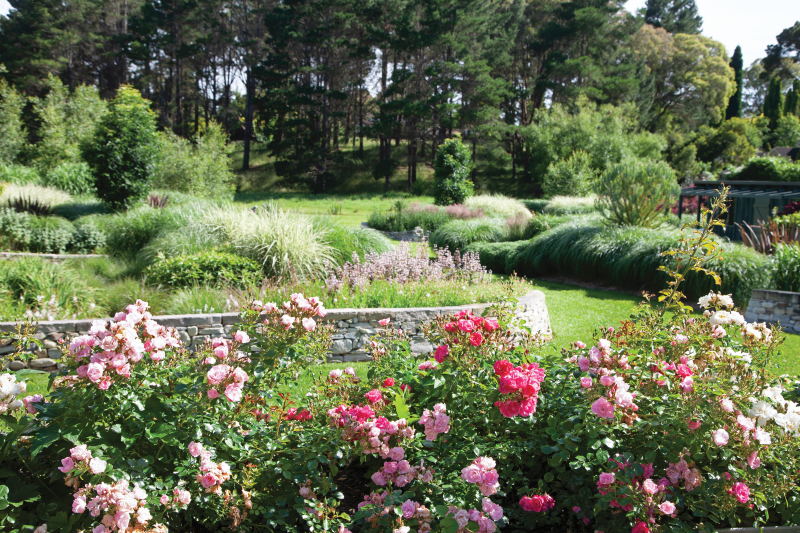
In that move, many might have sought to create a simpler, smaller version of what they had known and loved, but aside from Patricia’s insistence on a birch grove and some favourite ‘Graham Thomas’ roses from her 2.4 hectare English-style garden, a boldly different plan was foremost in Tim’s mind.
“The whole idea was that we wanted something smaller and easy care, and I was really determined to achieve that,” says Tim. “Also, because the new house we were building was very modern in style, I felt that its garden areas should also be contemporary, to complement it well.”
On top of his quest for low maintenance and contemporary, the site for their new passive solar house posed challenges for any sort of garden making. Their block was one of four new lots created from land that was previously a low-lying pony paddock. A bog-prone water-soak, the paddock was subject to significant flooding during and after heavy rainfall.
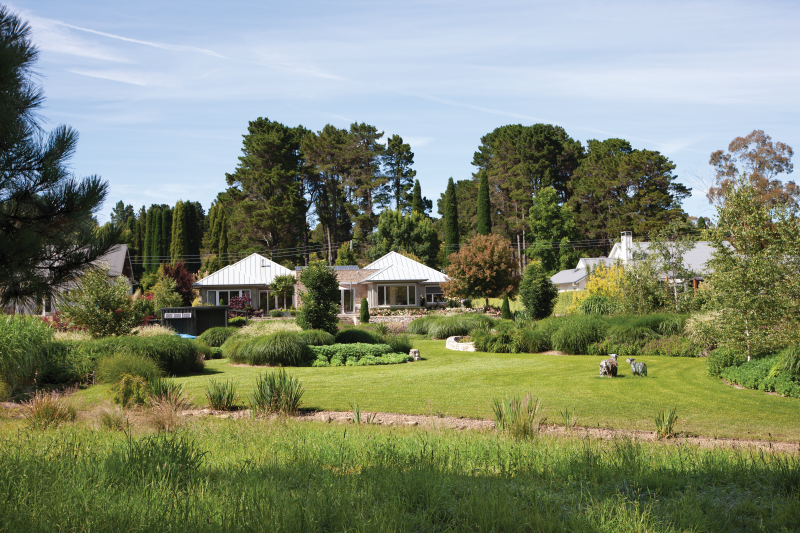
To create suitable building lots, extensive engineering works were undertaken to manage waterflow and drainage issues. These included the construction of a raised 2000 square metre pad of fill and heavily compacted clay at the front of the block for the house envelope, and the establishment of a shallow channel winding along the lowest point of the entire subdivision, forming a creek running across the back of each of the four deep blocks. Along the western side of the house, between the Copes and the neighbouring property, a wide swale was needed to channel stormwater from the street down to the remediated creek watercourse.
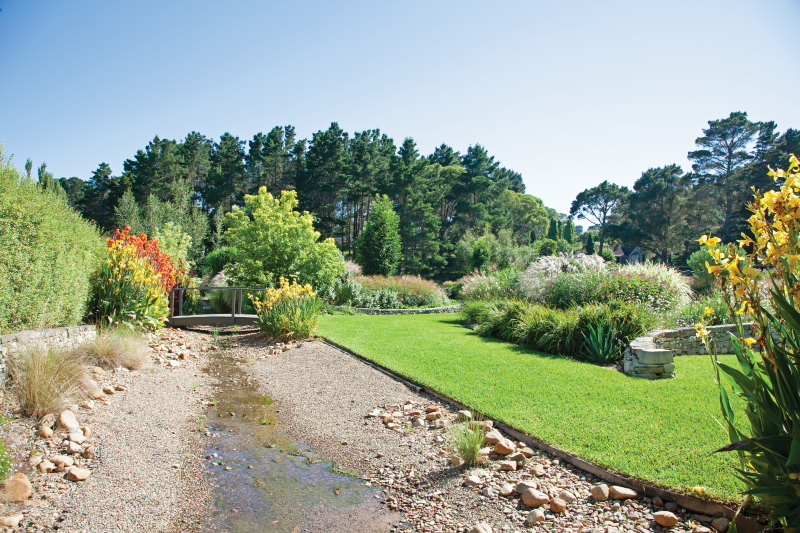
“While the creek would usually only flow as a small trickle, we knew it would always be subject to huge fluctuations,” says Tim. “This meant that the lower end of the block would be fairly wet quite often, and after a major rain event there would be flooding. So any garden in this area would need to be designed not only for minimal maintenance, but also to withstand wet soil and periodic inundation.”
With challenges in all directions, the Copes started with the front garden where the compacted clay and lack of drainage made initial success at making an easy garden very difficult.
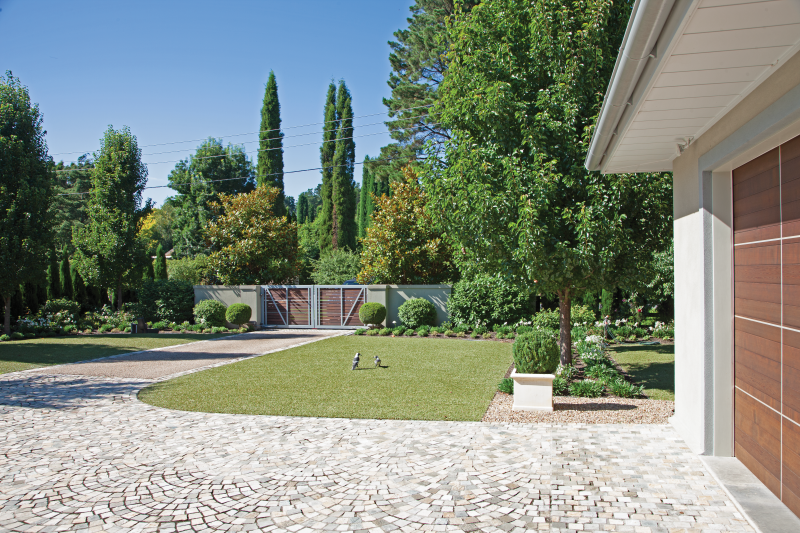
“I wanted a formal but contemporary look at the front, to complement the house,” says Tim “and to me this meant hedges and balls along with some trees for privacy screening. We started off with camellias and ‘Spartan’ junipers, but due to the conditions nothing thrived.
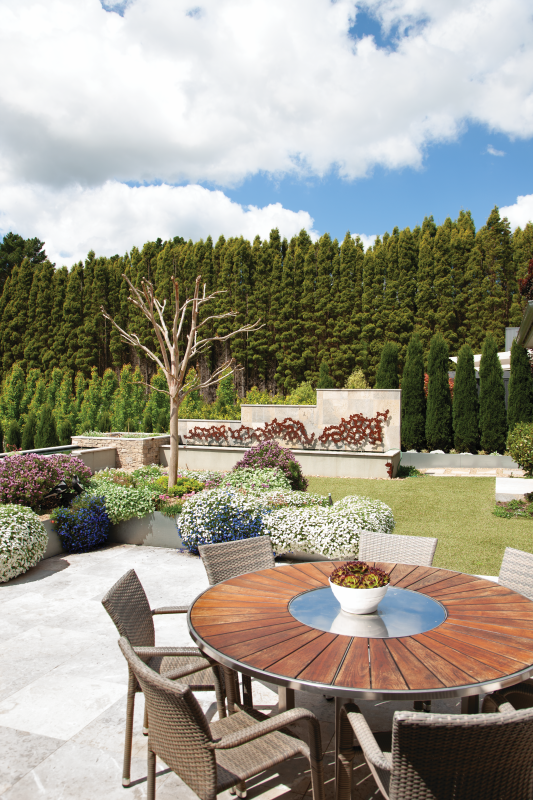
“We’ve since added loads and loads of compost to get good soil quality, and the front garden is now working well. Along with hedges and shaped balls of rhaphiolepis, which has small white flowers, we’ve planted white dogwood, ornamental pears, and low clumps of white iberis softening the edges. All of these are very easy to manage.”
One of the surprising but often unnoticed features of this calm and elegantly modern front garden, is that its lawns are synthetic. When Tim first announced his intention to use artificial grass, he found his ‘brilliant idea’ was not necessarily enthusiastically received by others.
“I wanted a perfect lawn, having maintained perfect lawns at Prittlewell for so many years, but I was also really determined to make things low maintenance, so I had a problem, especially given the soil and the drainage issues at hand.
“Apart from negative reactions to the idea of a synthetic product, one of the things that people warned me about was that artificial grass could be a heat trap. Late in my deliberations I found a product that not only looked the part, but was also proven to be 30 per cent cooler than others. We’ve used it also in the terrace garden on the north side of the house.“
With front and terrace areas under way, Tim turned his thoughts to what was to become the main garden: an area of approximately 4000 square metres, stretching from the house down to the creek.
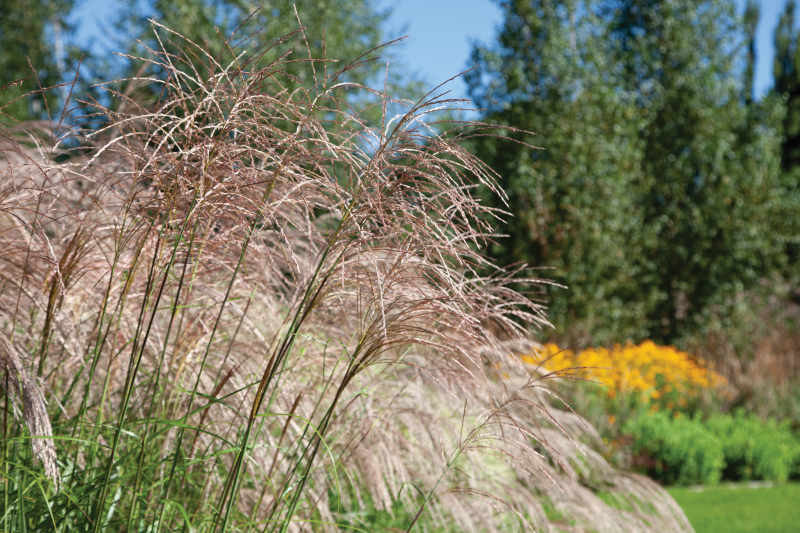
“I had been Googling ‘easy care gardens’ and found myself looking at grass gardens, mostly in California. When I investigated these further, it seemed to me that a garden featuring grasses might be the way to go. Then I got a copy of Planting, by Piet Oudolf and Noel Kingsbury. It demonstrated that you could have a beautiful and interesting garden with maintenance as simple as cutting everything down once a year. This idea was a revelation to me at the time.”
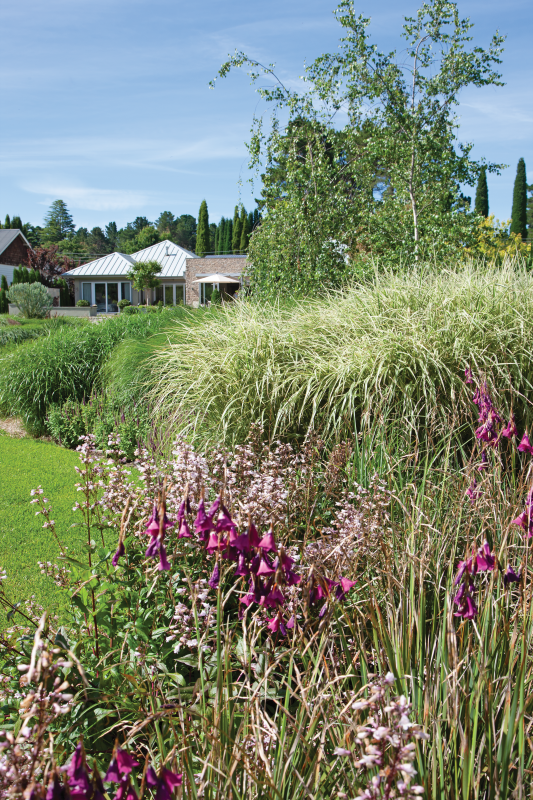
With Tim’s growing excitement about the possibility of a prairie style garden, Patricia was concerned she would miss trees and flowers – the things she has always loved most in any garden. Tim conferred with respected local designer, horticulturalist and plantsman Chris Webb with a brief to develop a plan.
Chris, who has trialled a large collection of grasses in his own garden over many years, could see the design potential, as well as the site’s planting constraints.
“I’ve loved grasses for ages,” Chris says. “I think they are absolutely wonderful and we should use them more often. I’m frequently suggesting various species for all sorts of situations, but here, with the key issue being water inundation, I thought that grasses and certain perennials were about the only option that would be workable.”
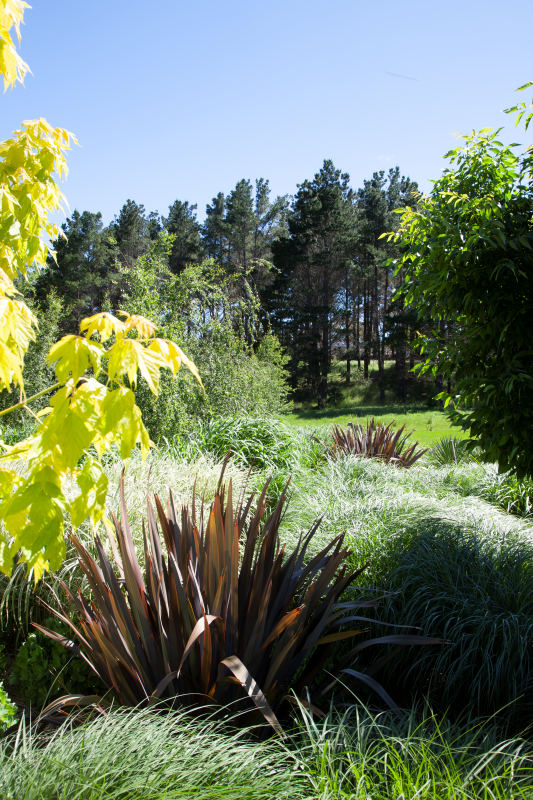
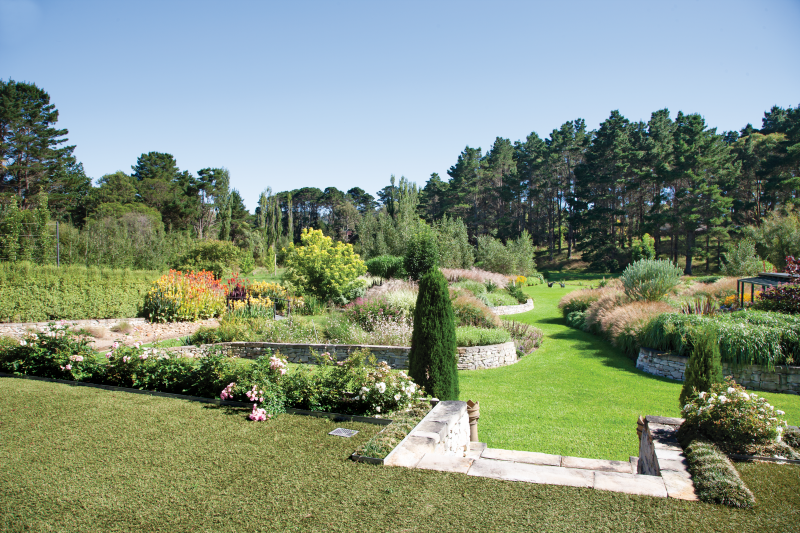
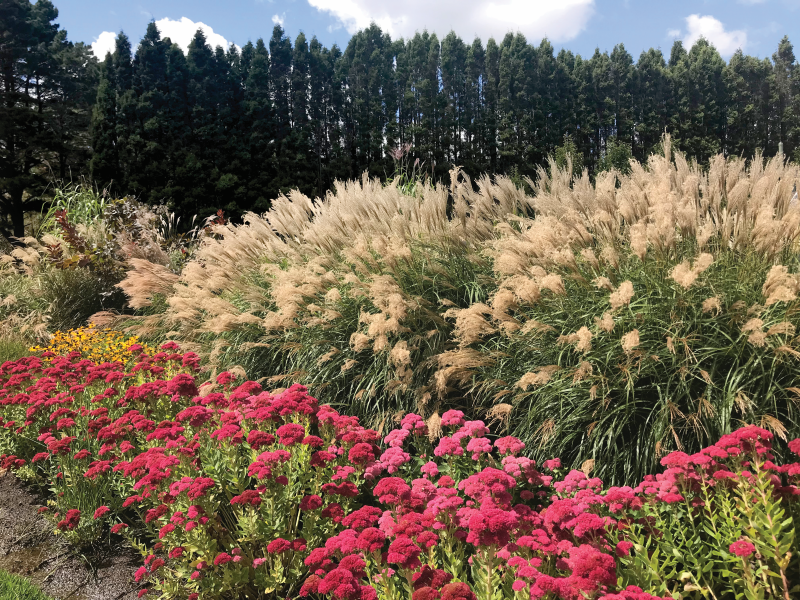
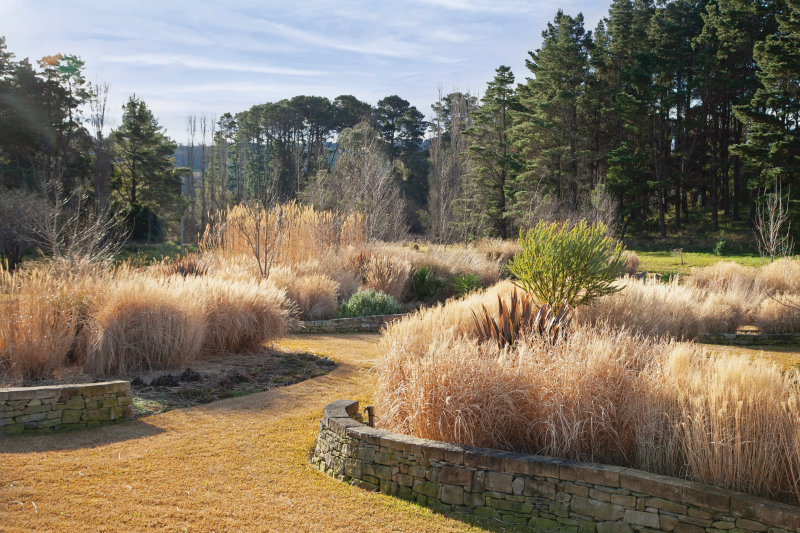
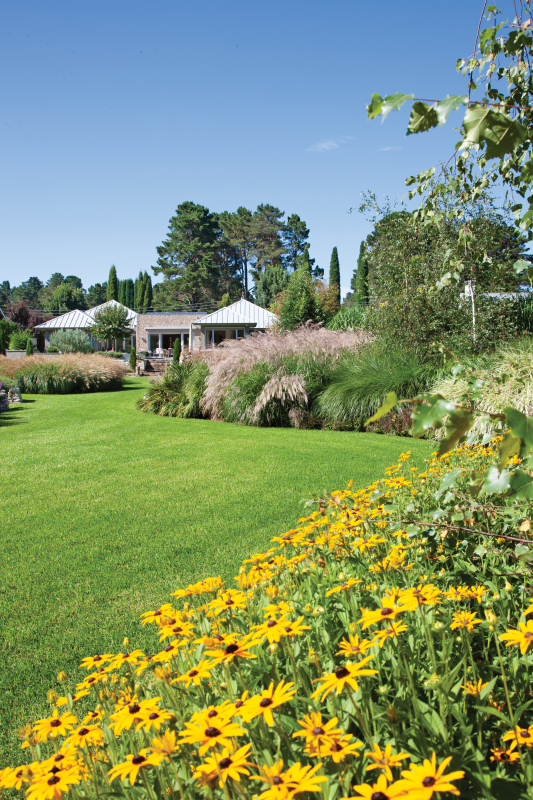
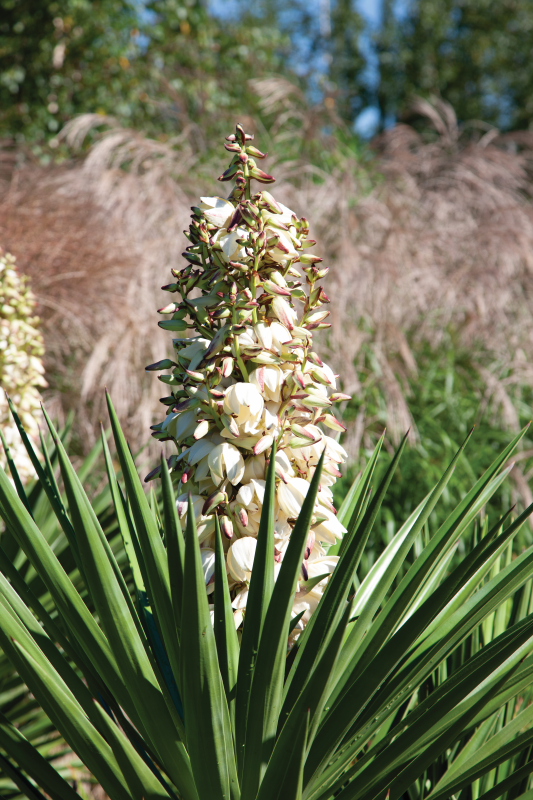
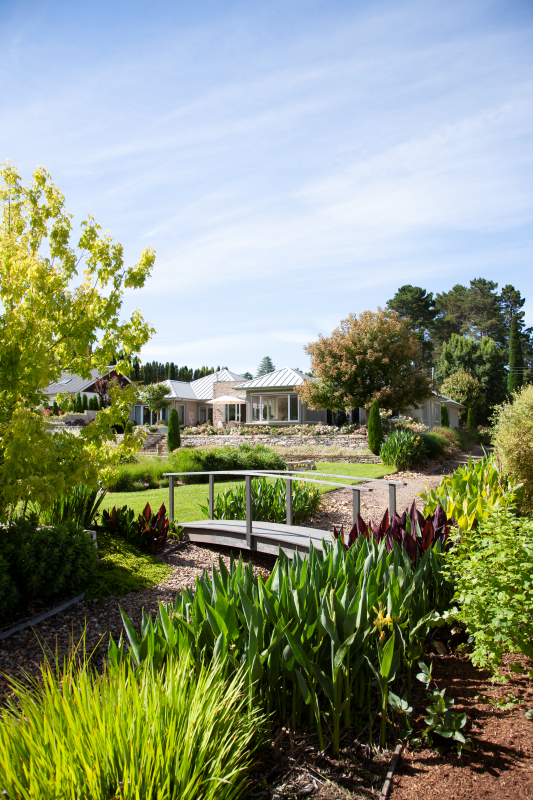
The garden was established in 2018. The design features curving low stone walls that define garden beds, with wide swales of lawn in between. The beds are planted predominantly with grasses, using around 20 varieties, but also contain several groupings of strappy plants such as Siberian iris, yellow poker, Fairy’s fishing rods (Dierama pulcherrimum), flax and yucca. Sedum ‘Autumn Joy’ and perennials such as boltonia and rudbeckia are interspersed through the plantings as well.
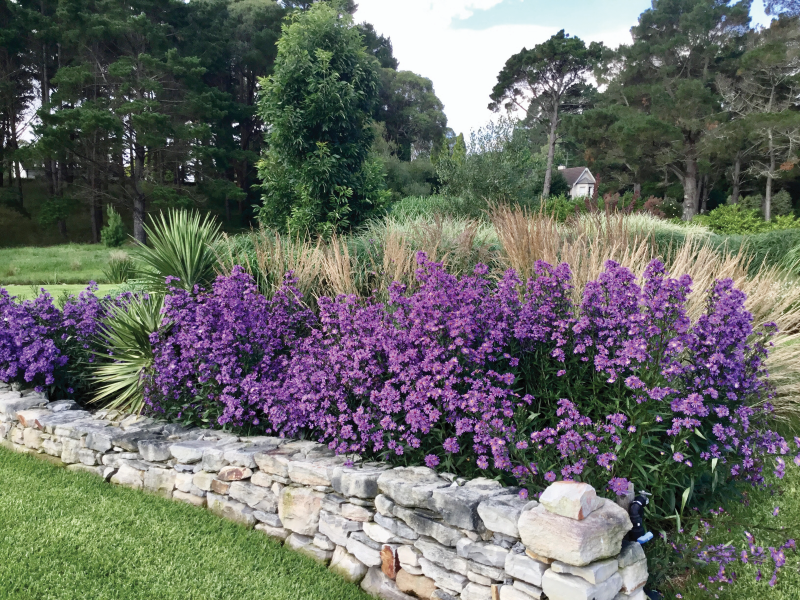
The contrast between the walls’ solidity against the soft sway of the grasses is arresting. The flow of lawn and walls reveals more contrasts, of colour and shape among the building blocks of the walls, and of colour, shape, form and texture of the plants they embrace. Seasonal changes are dramatic. Beautiful seed heads form in autumn, persisting as the grasses turn from green to glowing prairie gold in winter, shot with silver on frosty mornings.
Patricia’s beloved birch grove was established early at the lower end of the western border. “I had to be firm and insist upon at least some trees to start with,” Patricia says. “It would be impossible for me to live without them, and over time we’ve added quite a few more so that it’s not quite the strict prairie garden as Tim might have liked. It’s been a bit of a balancing act between his preferences and my gardening instincts.
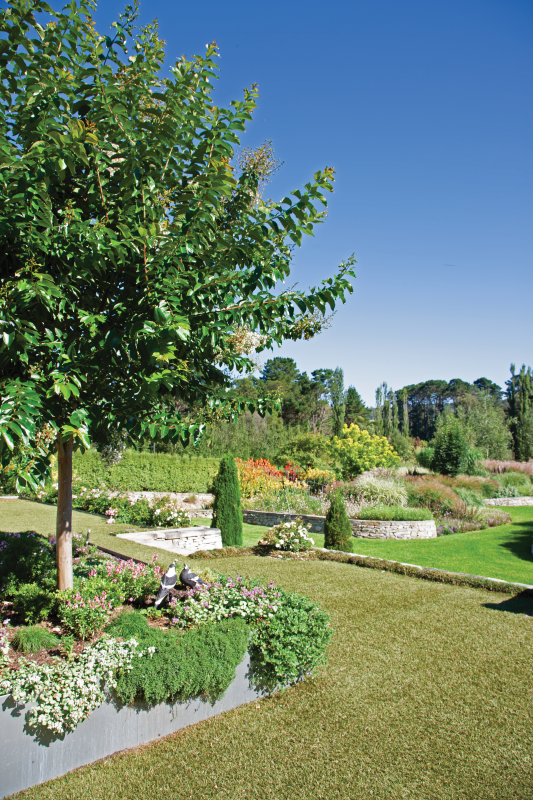
“I’ve missed having lots of flowers terribly, so have added them in here and there. Up on the terrace garden I’ve put in more roses and have used purple and white bacopa to cascade around the edges of the central bed, which looks wonderful.
I’m pleased we have the crepe myrtle in the central terrace bed – this flowers spectacularly in summer and provides shade as well, but of course, being deciduous it lets the sun through in winter.”
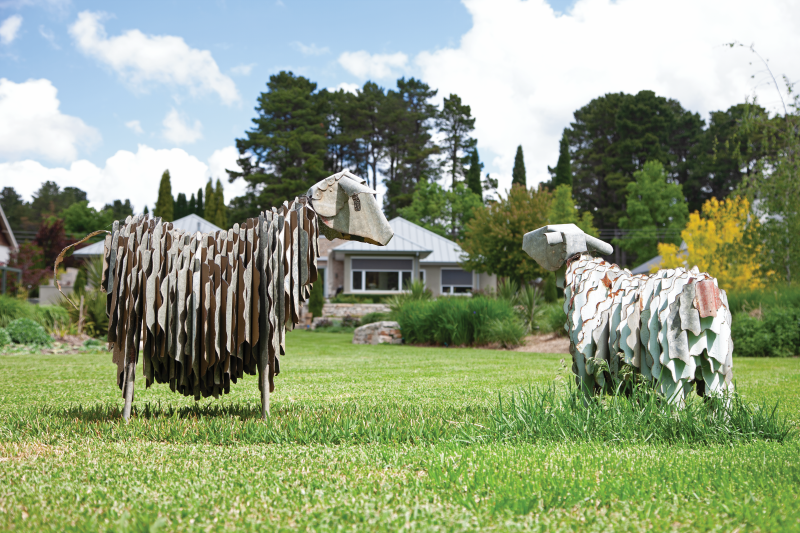
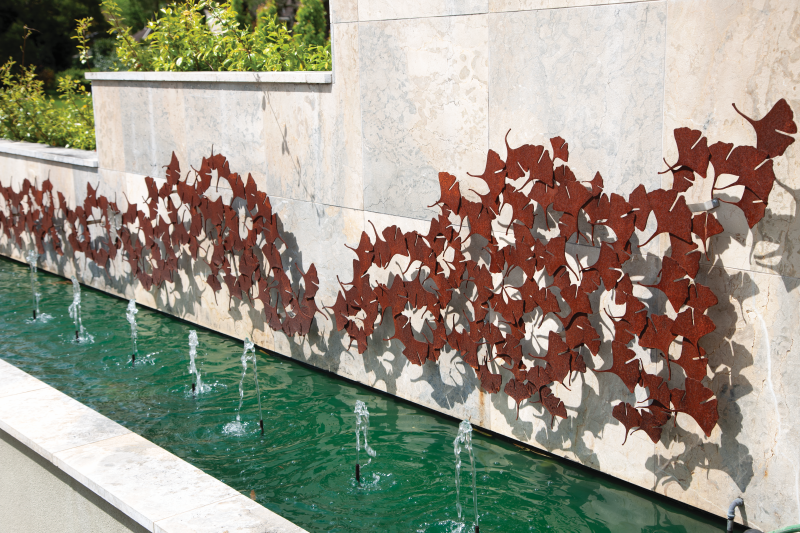
Also on the house terrace is a corner water feature distinguished and enlivened by sculptured falling ginkgo leaves, made by Rudi Jass. A shade-throwing Acer negundo sits on the opposite western corner. Along the side of the house the wide drainage swale has been given a dry creek bed look, and its sides edged with grevillea, callistemon and grasses.
The couple remain immensely pleased with the maintenance aspect of their downsized garden. “Look, it’s fantastic,” says Tim. “The gardener comes four hours a week, other than in summertime when there’s a bit more to do. The grasses and perennials in the prairie garden can be looked after by just letting them grow, then cutting them back once a year, at the end of winter.
“I did think I’d be constantly mowing that lawn out there, but I’m pleased to say I mow it in summer once a week, never in winter, and the rest of the year just once a fortnight. And it only takes me 40 minutes each time, so I’m very happy about that, along with the fact that we’ve achieved something beautiful, interesting and different in such a short space of time.”

Back Issue October / November 2022 (PDF Download)
Relive the beauty of the Southern Highlands with this digital back issue of Highlife.
Living colour
Textile and interior designer Tigger Hall has renovated her Bundanoon home with a French twist, not by adding an extension, but by the creative use of space, light, colour and recycled materials.
Inside art
Yvette Tziallas has had health issues for much of her life, and her art frequently “comes from an anatomical, medical place”. Her wild interpretations of complex organisms are attracting increasing attention.
Bold as grass
Former Prittlewell owners Tim and Patricia Copes wanted their new garden to be low maintenance and contemporary, and have created a stunning prairie style garden on a challenging block.
Clever chooks
Well managed chickens can be a garden’s best friend, says Kirstine McKay, who has kept chooks for a decade. She explains why she loves heritage breeds, eggshells and chooks with personality.
How’s the serenity
Over 10 years, a group of volunteers has turned an abandoned brick pit into the Goulburn Wetlands, an environmental success story that is as appealing to people as it is to wildlife.
Feet first
A thriving sock business is a surprise find in the small country town of Crookwell. Andrew and Lucy Lindner tell us how they are carrying on a 10 generation sock making tradition.
A week in the Wild West
The Hebridean Way is a popular sightseeing route for cyclists and walkers wanting to explore the islands of Scotland’s stunning Outer Hebrides.
One perfect day
If you’re looking at options for your big day, our annual wedding round-up offers plenty of inspiration for planning an idyllic country wedding.
This is a virtual product. Upon purchase, you’ll receive instant access to download the magazine as a PDF. A secure download link will also be sent directly to your email, so you can revisit and enjoy your issue anytime.