
Oct/Nov 2023
FRANCES SIMONS
Photographs Tony Sheffield
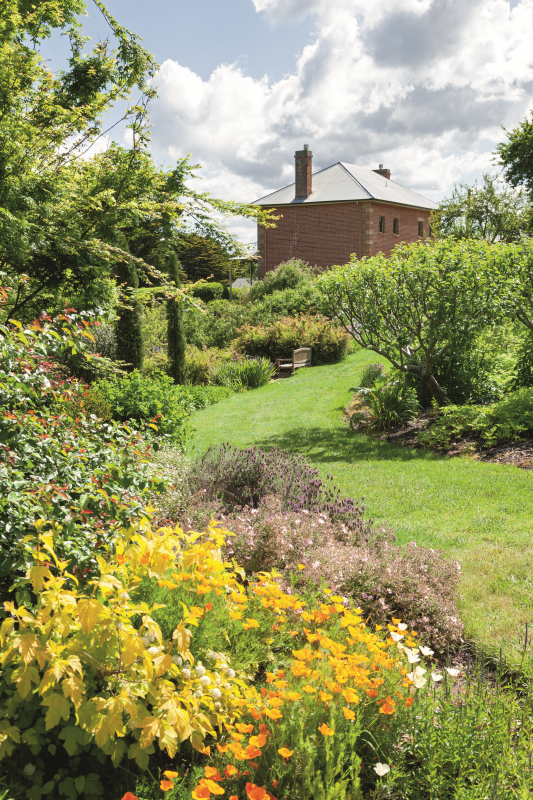
YOU’VE HEARD WHAT THEY SAY about the camel: that it’s a horse designed by a committee. So how would it be to garden by committee, with plans and progress dependent on stakeholders whose priorities, perspectives and advice were not necessarily shared? What difficulties might be encountered, and what outcomes might be achieved – or not? It could be a bumpy ride on that camel, to an unknown destination. Would you be up for it?
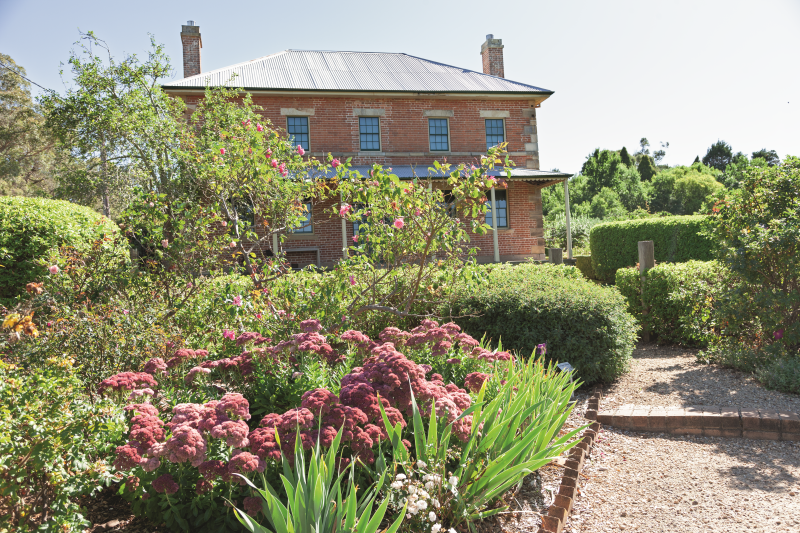
A visit to the garden of Harper’s Mansion, a National Trust of Australia (NSW) property in Berrima, is a chance to give wholehearted thanks to those who were and those who are. Among the perfumed blooms of old-fashioned roses, heirloom camellias, fruit trees, hazelnut and woodland walks, you’ll find a garden of delight for all ages and for all seasons.
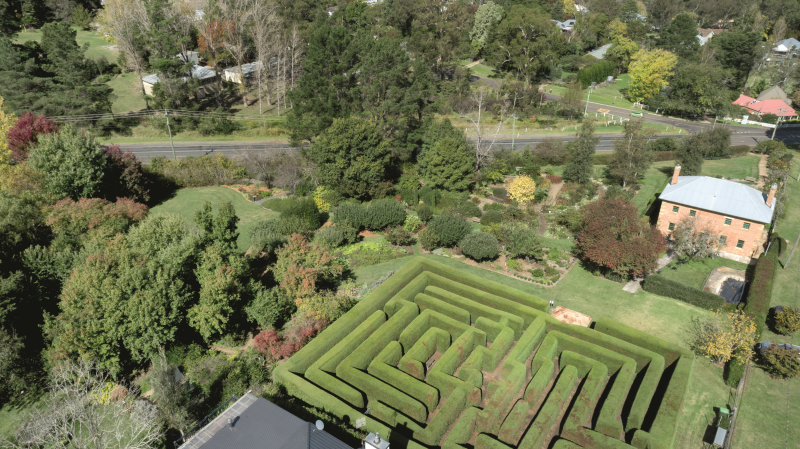
Well-maintained paths and grassed walks make an easy traverse of its gentle slope, with many places to sit and picnic. There’s a real-deal two-metre high hedge maze to excite and exhaust energetic children, and a pond (safely fenced should they escape and go wandering).
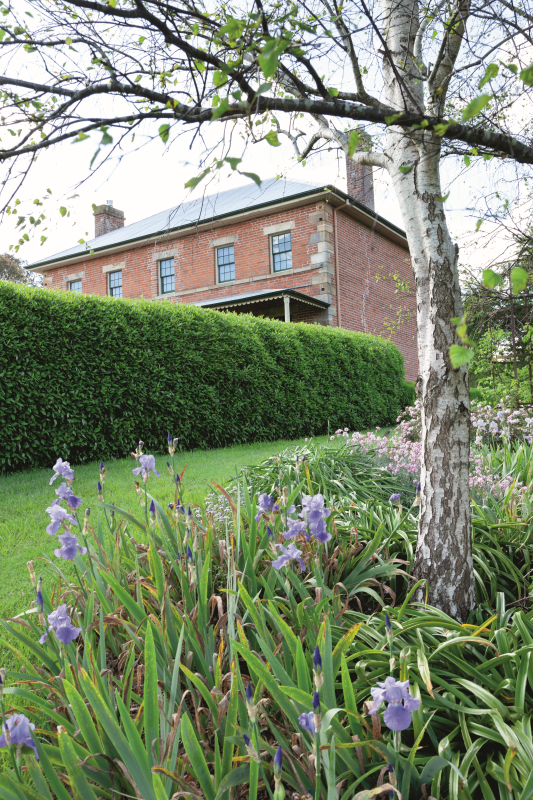
This appealing two-acre garden surrounds a historic two-storey Georgian residence constructed in 1837-38. Built for publican James Harper, son of convict parents, and his convict wife Mary, the house provided five rooms on the ground floor, six on the second, a separate large kitchen behind it, a stable block and coach house. It was an impressive dwelling for its time, with an imposing presence on the hill at Berrima’s northern end. It was also the biggest building in the village, until eclipsed by the White Horse Inn, and it made a bold statement from the Harpers about their colonial success. In contemporary real estate and millennial speak, it was a trophy house telling their personal truth, heaven forbid.
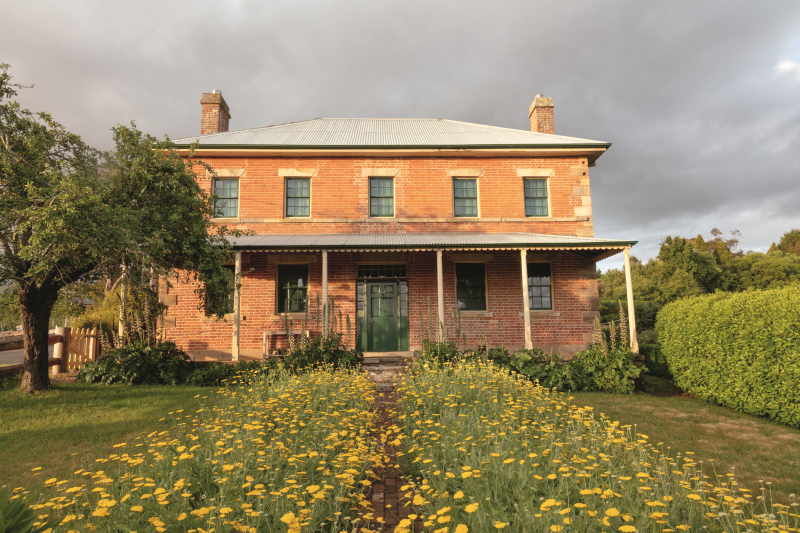
Scant details of its early garden exist: a kitchen garden site is noted on a contemporaneous survey; an 1850s sale advertisement describes an acre of land ‘handsomely laid out as a flower garden’ in front of the house.
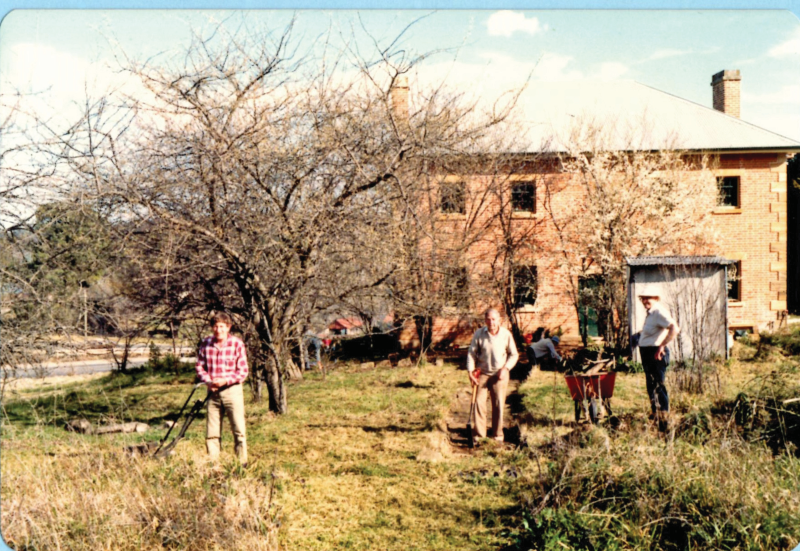
The garden that grows today is predominantly the work of a constellation of volunteers and volunteer committees, working under the auspices of the National Trust. Over 40 years these many individuals have ridden various legs of a long journey towards its current beauty and clear purpose. Contested views about heritage values and garden making – restoration vs re-creation vs innovation for example – as well as a disheartening proposal by the Trust in 2006 to sell the property, meant the road has not always been smooth. With impressive grassroots capability, volunteers and Berrima residents opposed the sale, arguing a business case to run the property at no cost to the Trust. Their plan was accepted, subject to achieving certain financial targets, thus saving the locally cherished house and garden for public posterity.
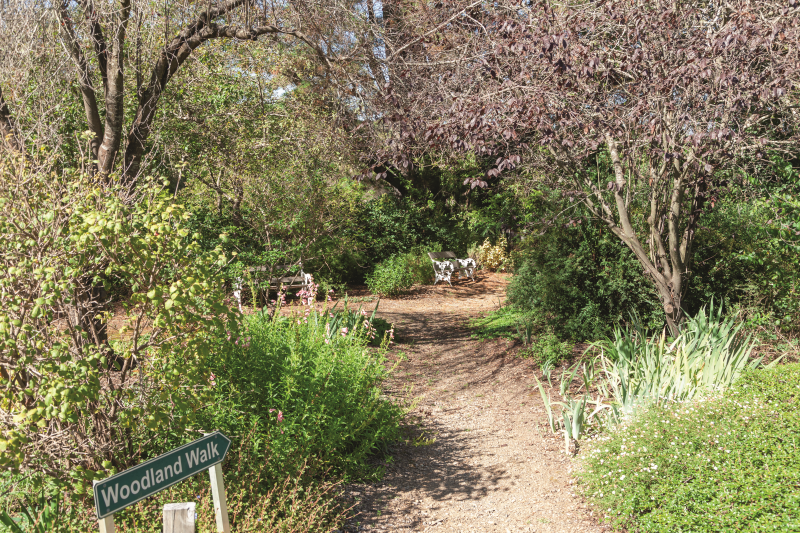
The backbone of the present garden – its main paths, lawns and beds – is the legacy of landscape gardener Michael Jackman, who leased the property from the Trust from 1999 to 2006. He developed and established the garden’s core layout in consultation with stakeholders. His plan included creating the maze attraction behind the house on the site of the old stables, to help assist the property’s long-term financial viability.
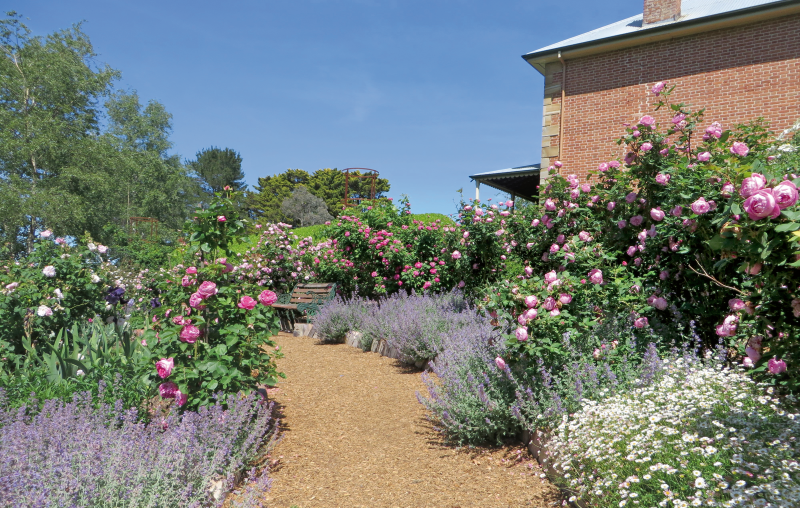
The garden’s design and planting arrangement, with larger trees towards the perimeter of its precinct, ensures that the handsome brick and sandstone house is visible from all points within its boundaries. While the house is indisputably the garden’s great centerpiece, the garden is the house’s great complement.
A side entrance leads to the house’s stone-flagged front verandah, bordered by acanthus beds. Looking out and down towards the village, a central brick path with a garden bed on each side cuts a resolute line across a small, square, hedge-enclosed lawned terrace, the one part of the garden that has been restored as closely as possible to a past structural incarnation discovered by excavation. Beyond and below the viburnum hedge of this tightly defined space, flowing beds, lawns and paths work with the natural form of the land. Plantings are appropriate to the heritage focus of the site, using reliable ‘old-fashioned’ selections and colours rather than flashy modern hybrids.
Bordering the western fenceline, long beds display around 30 roses bred prior to the 1850s. Planted in 1994 by well-known local gardeners and rosarians Heather and Richard Cant, the beds established the garden’s first collection of heritage roses, with repeat-blooming noisettes, bourbons and teas. Heather’s signature style of a garden with roses rather than a rose garden is evident.

Trusty perennials such as penstemons, delphiniums, dahlias, lupins and iris are mixed among the roses, providing colour and interest across the year. Two curved beds, established with funds from the David Ruston OAM Heritage Rose Conservation Grant, were planted in 2021 and feature several smaller-growing heritage roses. These beds honour the late Sue Kingsford OAM, whose generously shared knowledge ignited many a novice’s small spark of rose curiosity into a flame of old-rose passion.
The eastern slope of the garden displays the central rose collection, planted in 2011. A pair of tall rose supports marks each end of a central path through the area, with roughly 60 exuberantly growing species roses and heritage hybrids within.
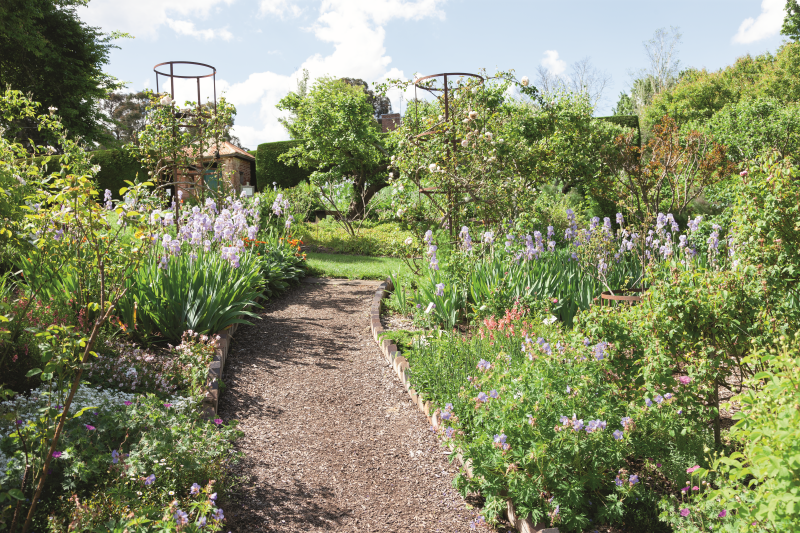
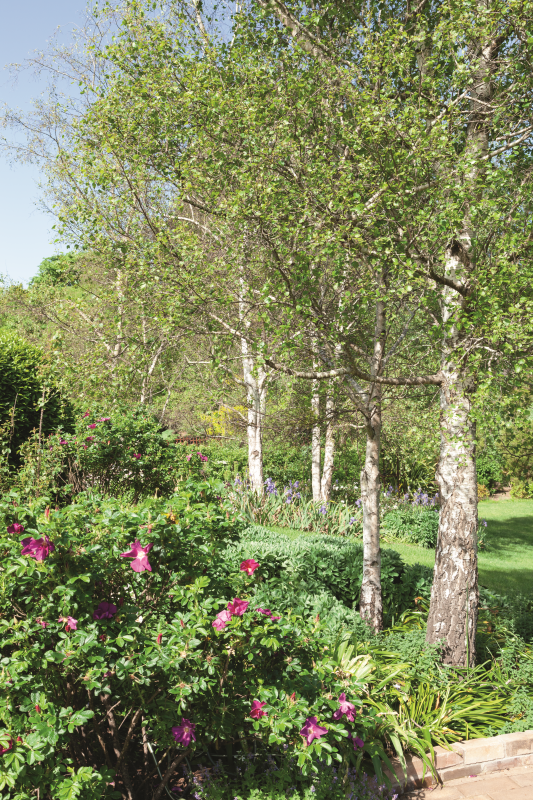
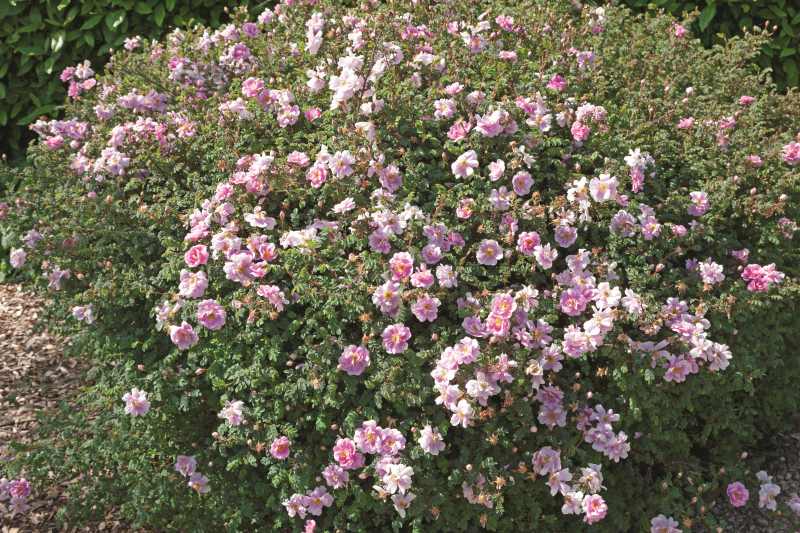
Seemingly ever-flowering ‘General Gallieni’ (1899), highly fragrant Rosa gallica ‘Officinalis’, and tree-like Rosa brunonii are but some examples. A hedge of ‘Stanwell Perpetual’ lines the higher border, profuse with flowers from November to April, bristling with tiny spiny prickles when dormant. Three stands of silver birch descend the area’s slope, gently delineating its southern end. Groundcovers such as Santolina chamaecyparissus and achillea, plus many flowering perennials, wander throughout the beds.
Volunteer Chris Thompson coordinated the garden’s development from 2016 to early 2023, making a significant contribution to its evolution. Before that she was a volunteer in the house for seven years, and a member of Harper’s management committee. She has comprehensively recorded the ups and downs of the garden’s history in her book A Struggle for Relevance (2022), assisted by the Southern Highlands Branch of the Australian Garden History Society.
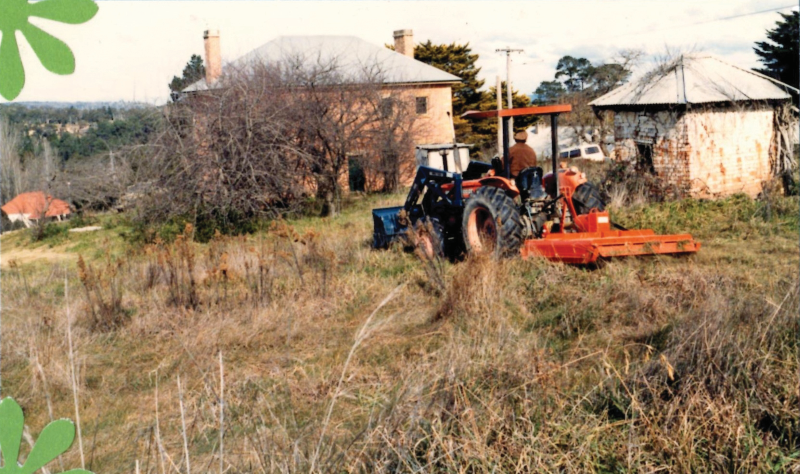
“When I took on the coordinator’s role, the property had become self-supporting thanks to the efforts of our volunteers and the success of the business plan,” Chris says. “The maze, the garden and the house are all integral to this, each supporting the attraction and experience of the other.
“During my time I focused on making more of the garden as a whole, adding smaller steps and pathways to interconnect the main walks, so that visitors can really wander around. We also dredged the pond, added a boardwalk around its lower side, removed an immense amount of invasive plants from that lower area and re-planted it with quick growing plants to screen us from the road.”
Ongoing maintenance is always an issue, and since 2010 the garden has had the assistance of Kurt and Birgitta Singer for heavier jobs like pruning the fruit trees and hedging the maze. “We couldn’t have managed without their help,” says Chris, “and in looking to the future for other needs we formed a partnership with volunteers from the Illawarra and Southern Highlands Heritage Rose Group to care for our now significant rose collection.”
Respected horticulturist and plantsman Les Musgrave took on the coordinator’s role in March, bringing years of experience in garden design, cultivation and propagation, as well as buoyant zest and energy for the garden’s future.
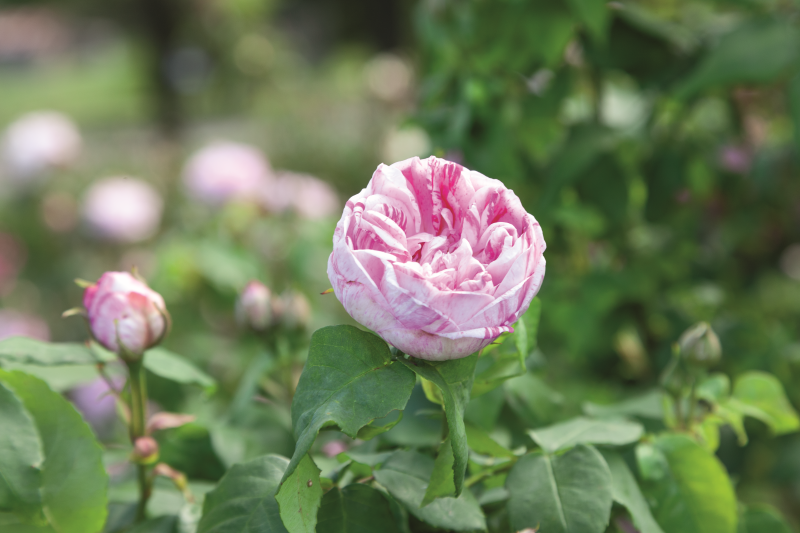
“It’s a lovely garden with a lot of character, and one of the notable things is it feels much more expansive than the space it actually occupies,” says Les. “Michael Jackman had a real feel for the natural landform, and his design works so well with it here. “My focus will be on adding even more character to certain areas, and building up the overall plant collection. There’s a wealth of information from the Trust and other heritage sources about plants available in the early years of colonial settlement. There’s a lot of period-appropriate plants that we don’t as yet have, so that will be wonderful to work on.”
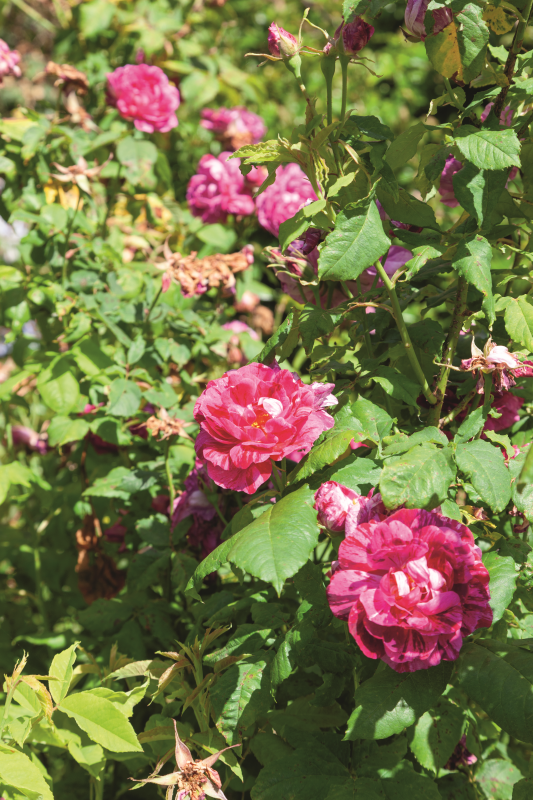
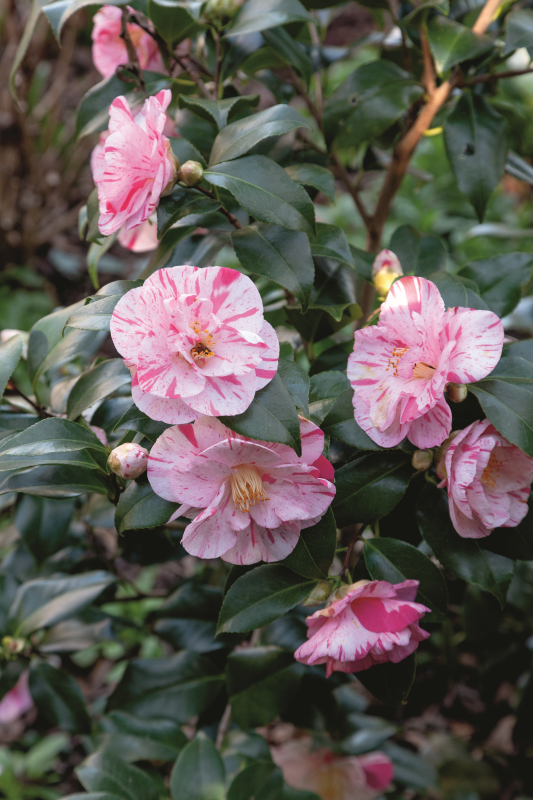
In 2015 a number of heirloom camellias – camellias that were available in NSW in the 1800s, some of which were new Australian-bred varieties – were planted at Harper’s Mansion when the ‘Camellia Ark’ project was looking for a location to ensure their preservation. The camellia grove sits along a section of the northern boundary, planted with hellebores and hydrangeas, with its curvilinear edges brightly delineated during winter by early daffodils.
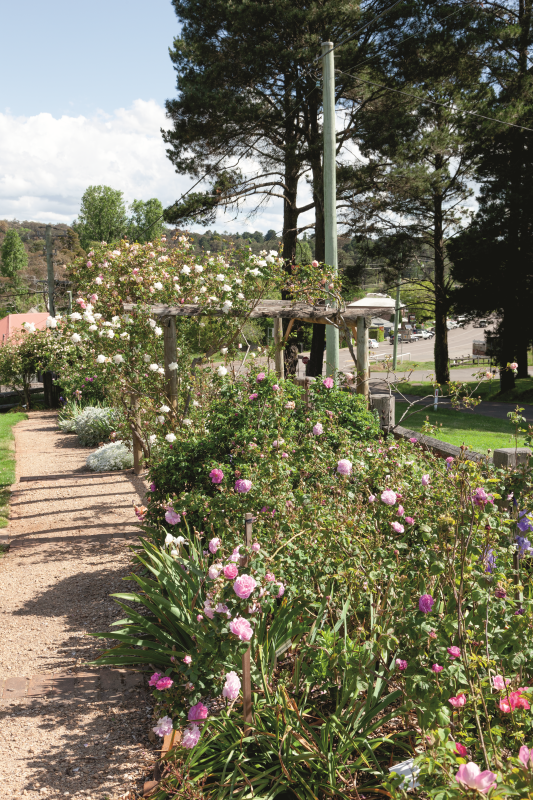
“I’m looking forward to the further development of this significant camellia collection, displaying them well as they grow,” says Les. “The area is perhaps a little too shaded now, so I’m starting to think about lightening the cover. I’m enjoying teaching volunteers to propagate plants for fund-raising sales, and in fact I enjoy helping all volunteers learn more about cool climate gardening. We have about 15 at the moment, aged from 16 to 93, and anyone who’s interested is warmly welcome.”
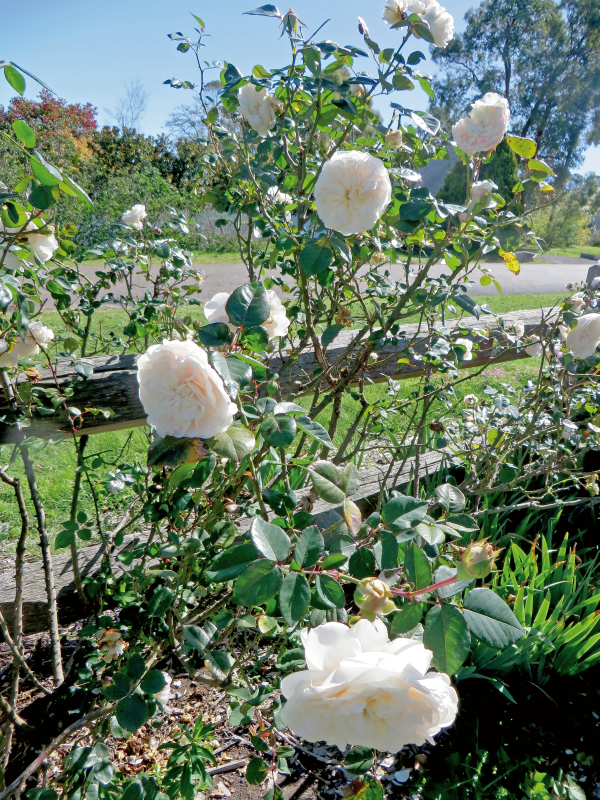
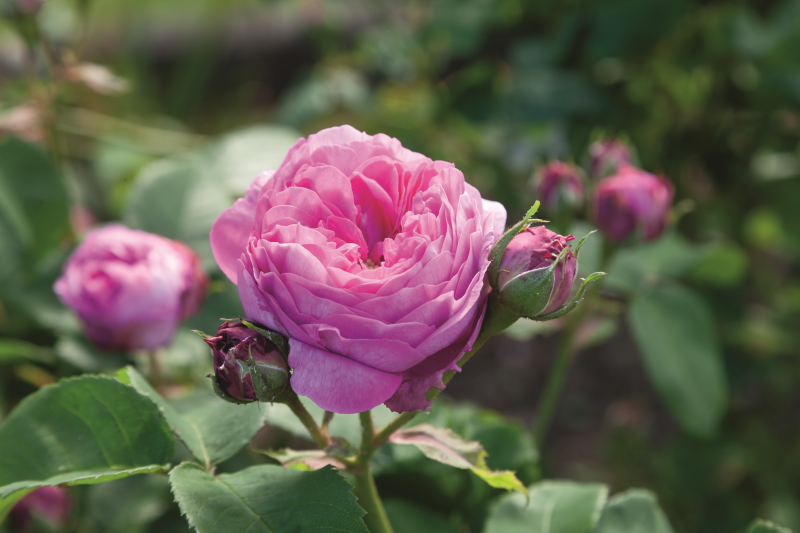
Peter Rezek, coordinator of the Illawarra and Southern Highlands Heritage Rose Group, is in charge of rose care. After a career in merchant banking, he studied horticulture at Ryde TAFE. When he moved to the Highlands in 2016 he began volunteering at Harper’s garden, with his passion for heritage roses directly inspired by Sue Kingsford. “I think heritage roses really are the best plant to have in a garden,” Peter says, “because they grow easily, they have interesting landscape shapes, they bloom over a long period and they have so much more perfume than modern varieties.
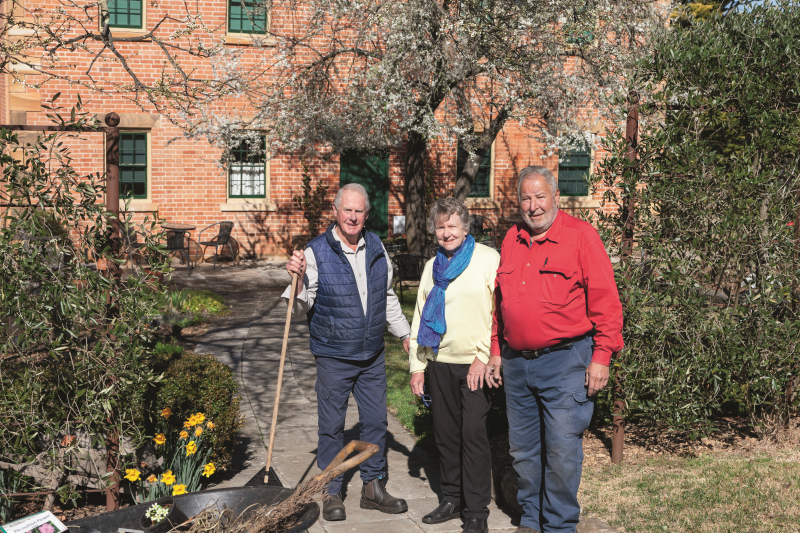
“My immediate focus is on regenerative pruning, so that the collection’s longevity is assisted, and I want to find ways to promote conservation, knowledge and enjoyment of these plants and this garden. We’ll be holding an evening of ‘Wine and Roses’ in November – a great chance for people to enjoy the garden and taste some local wines. I hope we can promote community connection with Harper’s Mansion and its gardens, and grow our group too.”
Whether you’d like to stroll through a cool climate garden of character and beauty, or inspect varieties of heritage roses and camellias that might find a place in your garden, or entertain children at the maze, or visit the house, or just enjoy a quiet spot to picnic or read, Harper’s Mansion is a wonderful place to visit.
Above all, while the impressive house was built as a statement of individual wealth and standing, its now gorgeous garden is a testament to the generosity and goodwill of many. They may have had to garden by committee, but they have produced anything but a camel.
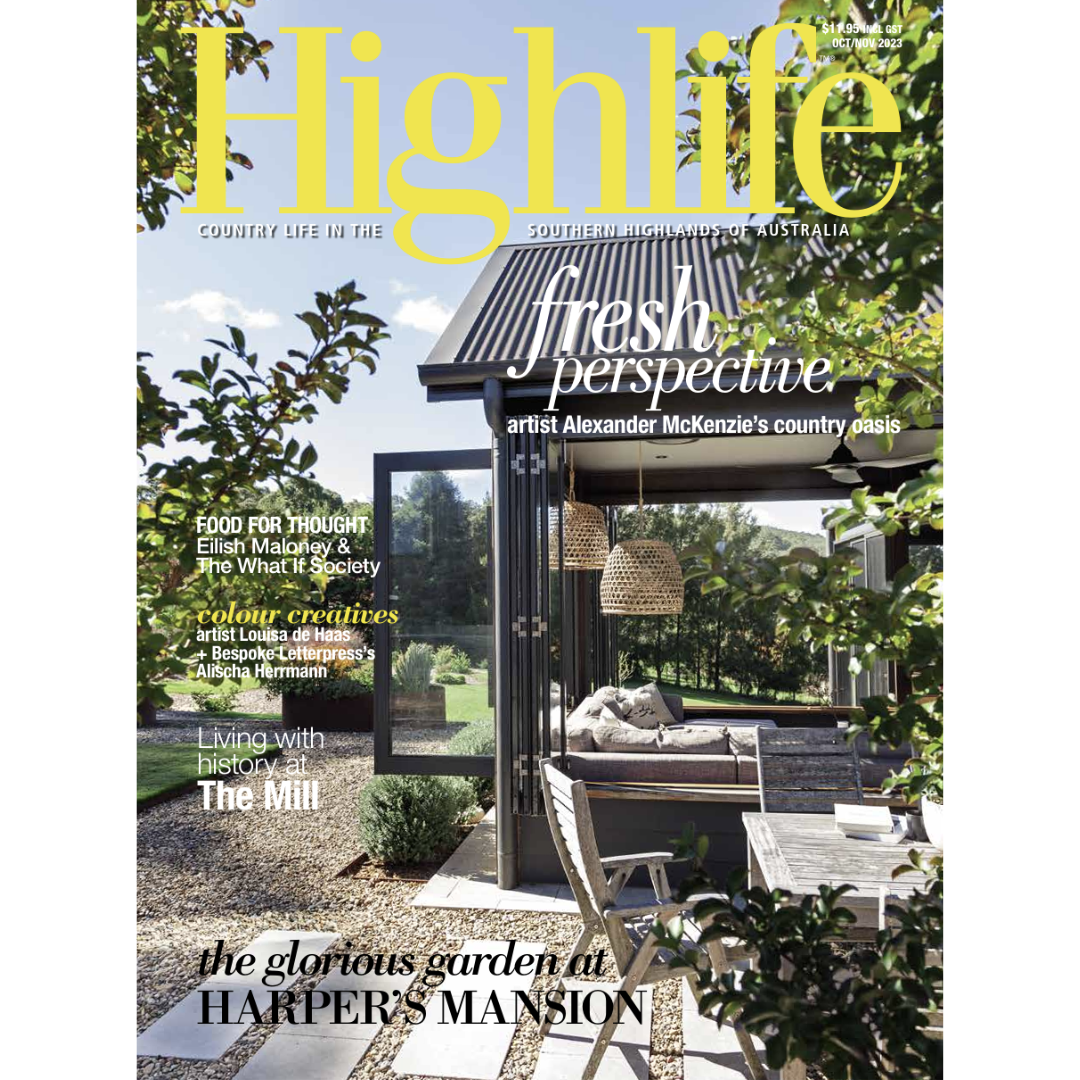
Back Issue October / November 2023 (PDF Download)
Relive the beauty of the Southern Highlands with this digital back issue of Highlife.
AN ARTIST’S COUNTRY OASIS
Landscape artist Alexander McKenzie paints his luminous imaginary worlds in a dream Bowral studio. He and his wife Simone show us the striking new property that prompted their move from Sydney.
THE MANY LIVES OF THE MILL
Built as a flour mill by the Throsby family in the 1840s, and used as a convalescent home for soldiers after WWI, The Mill has proved adaptable for nearly 180 years. Owners Jacki and Mike Brooks show us their historic home.
PRETTY IN PRINT
It seems people can’t get enough of Alischa Herrmann’s pretty and colourful designs. Her stationery company, Bespoke Letterpress, continues to expand, with two more stores opening in October.
BOLD MOVES
Mittagong artist and art teacher Louisa de Haas has switched from creating colourful jewellery to making her vibrant mark on canvas. She tells us why a splash of neon makes everything better.
A GARDEN FOR EVERYONE
Heritage roses and camellias and a hedge maze are among many attractions in the garden at Harper’s Mansion in Berrima. Find out why it is much loved by visitors and its volunteer gardeners.
FOOD FOR THOUGHT
Chef Eilish Maloney explains the thinking behind her ambitious food-focused cooperative, The What If Society, which opened its second store in August.
PLANT A SEED
Harvesting seeds is easier than you think and it’s a cheap way to replenish your garden and dinner table. Kirstine McKay explains the tricks of seed collecting and how not to plant tomatoes.
ONE PERFECT VILLAGE
For 12 years, Huw Kingston has returned to Brisighella, a hilltop village in the Emilia-Romagna region of Italy. He explains why it keeps drawing him back.
EDUCATION FEATURE
Schools today run a huge variety of extracurricular activities. We asked 11 schools to tell us about special programs they offer.
This is a virtual product. Upon purchase, you’ll receive instant access to download the magazine as a PDF. A secure download link will also be sent directly to your email, so you can revisit and enjoy your issue anytime.