
Jun/July 2025
FRANCES SIMONS
Photographs Tony Sheffield
FOR GEORGE AND KATHY SARTOREL, the first few years at Pepper Tree Creek, their 75-acre (30ha) property in East Kangaloon, felt quite biblical.
Moving there in 2019, after 20 years of European city living, they saw the effects of the region’s three-year drought on this normally high-rainfall locality.
Saving their 16-acre (6.5ha) garden from its water famine was their first challenge, with that year’s scorching spring and summer bringing smoke-laden skies and catastrophic bushfires unthinkably close.
Then came the floods, when 2020 brought torrential deluges for months on end. Their previously dry creeks became flooding watercourses and on higher ground, springs sprang where they’d never sprung before. The hill above their dam collapsed, triggering a landslide into its already full catchment.
The dam was destroyed and the area flooded with a hillside of rich Robertson mud.
The Sartorels had bought the property while living overseas, hankering for tranquillity to rekindle the pleasure of gardening they’d enjoyed many years ago; they now wondered what world they’d returned to. But at least the plague that followed was helpful. While humankind largely stood still during Covid, Kathy and George couldn’t have been busier.
“The extreme weather events we experienced made us realise we had to focus on much more than bringing our own flourishes to the garden’s already strong footprint,” says George.
“We had to make the whole place more resilient for the future. This meant significantly improving its infrastructure, including weatherproof road access and effective water management capability.”
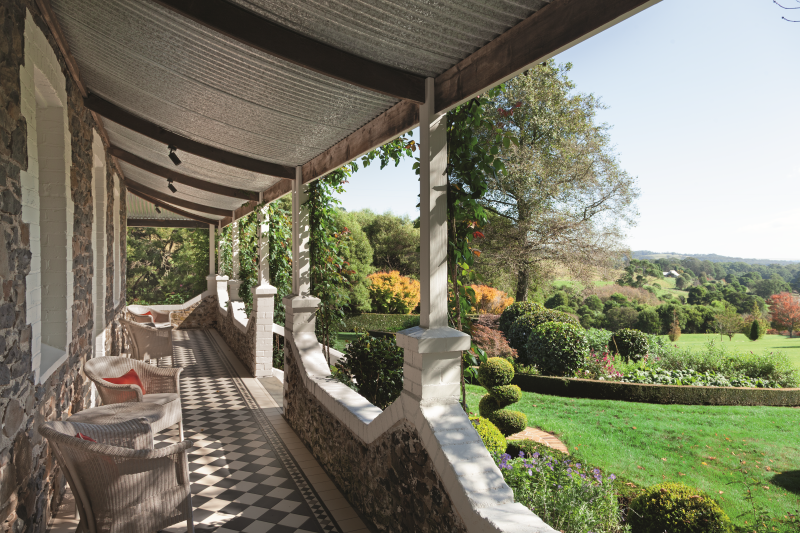
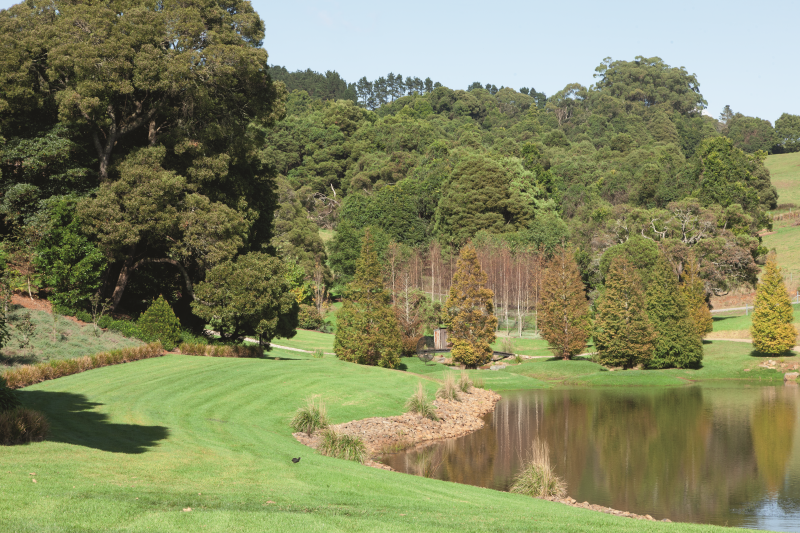
When the rain stopped and the earth dried, and with advice from Local Land Services staff, the dam was redesigned and rebuilt to play a central role in future irrigation and flood management; the hill was remediated from landslide damage by returning as much of the soil as possible to higher ground, and planting grasses and trees to anchor the exposed slump site. Hundreds of suitable native species were planted along the riparian corridor of the creek below the rebuilt dam.
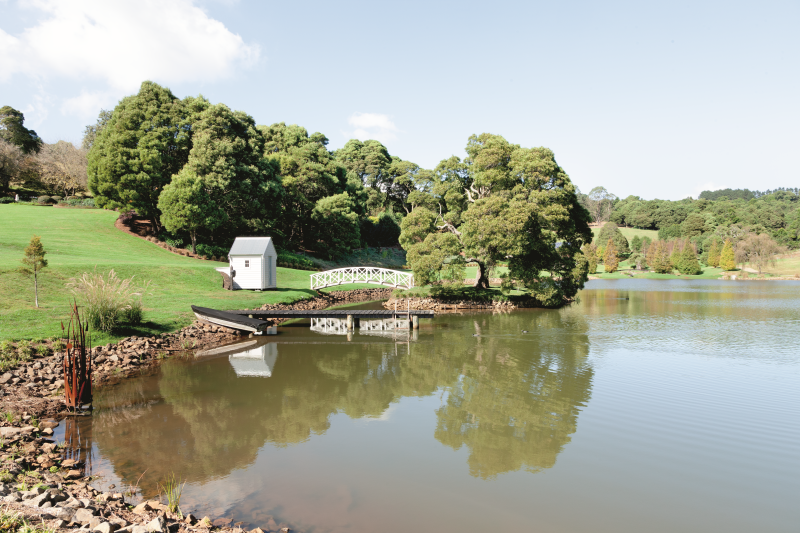
Roads into the hilly property were built to enable machinery access for the work required, as well as to provide longer-term farm and potential fire management capacity. Banks of solar batteries, rainwater catchment tanks, plant and equipment sheds and a jetty into the dam – a central visual feature as well as water source for the garden – were also built, drawing on the diverse skills of local contractors.
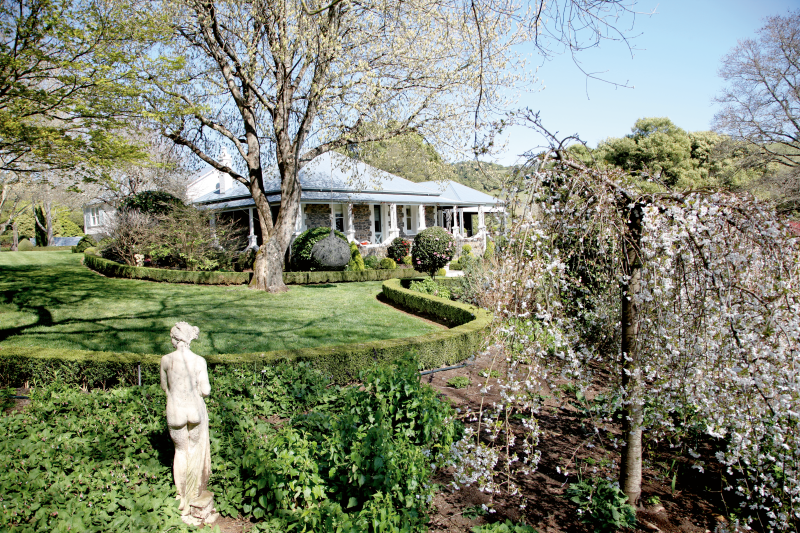
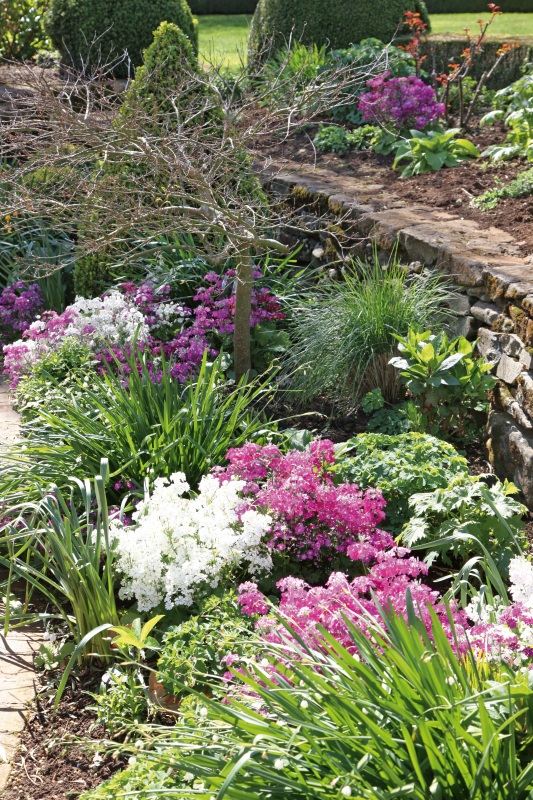
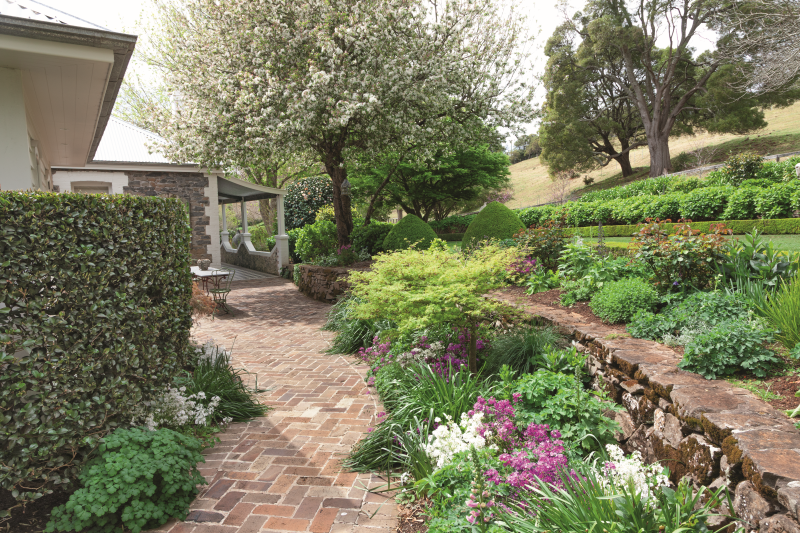
Turning their attention to Pepper Tree’s already extensive and lovely garden, the couple started to consider ways in which they could add even more to its appeal. The property was originally a dairy farm and previous owners had renovated and extended the 19th century stone cottage, and created a stunning hillside garden with terraces, stone walls, beds, hedges, shrubs and perennials, and a glasshouse, hen house and chicken run. The property included native woodland and hundreds of beautiful mature and younger trees.
The Sartorels felt there were ways to enhance the garden’s connectedness across its diverse and challenging topography: hilly, flat, open, enclosed, bushy, cleared, sweeping and intimate.
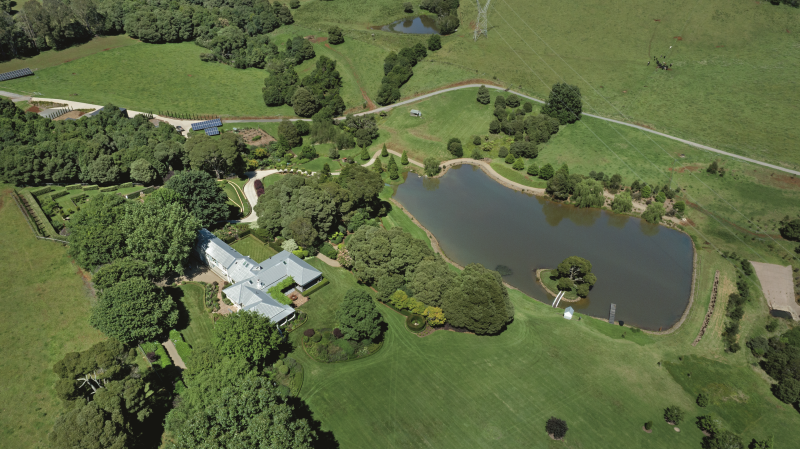
Others may have been happy to decline a ticket on this journey, opting to stay put at the lovely destination already reached. But with inherent creative instincts, Kathy and George shared the driver’s seat and started off on the road ahead. Working in the garden every day, with input and advice from their ever-willing team of gardeners, they got to understand the garden’s responses to its four distinct seasons, what design and planting ideas would and wouldn’t work, and how they could translate personal aesthetics to living form. Kathy says: “While we’d always loved gardening, I’d never really been into perennials before – I didn’t understand them – nor had I gardened in a cold climate, so I had much to learn.
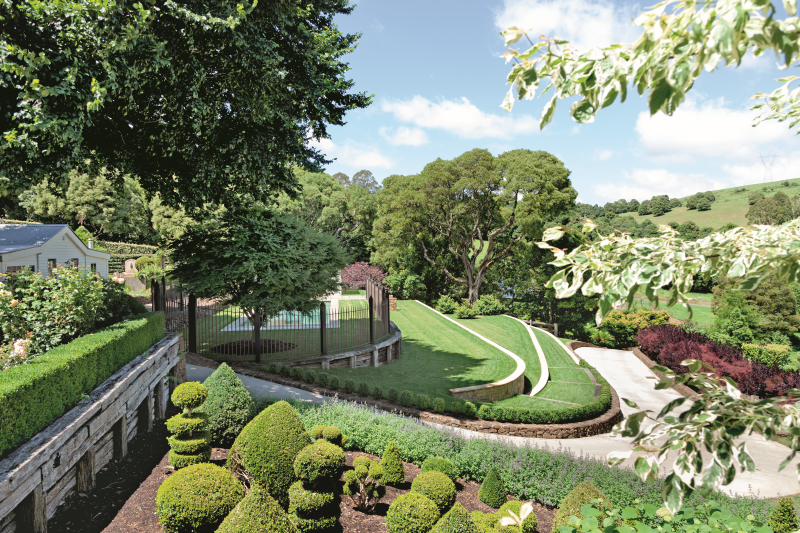
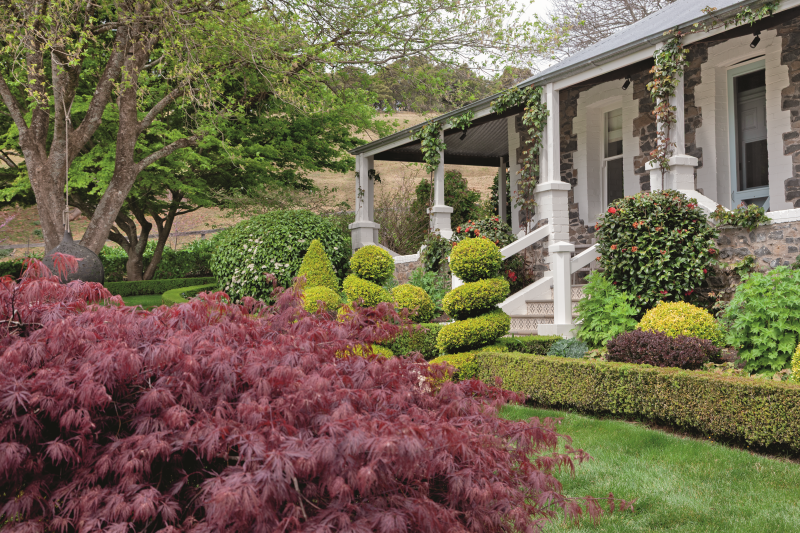
“One of the first things I wanted to do was to add topiary to the perennial beds around the house, to keep them looking wonderful even when they went to sleep in winter. Topiaries are playful and an easy way to create impact. They bring interesting shapes, texture and structure. They’ve always got their party clothes on, ready to charm.
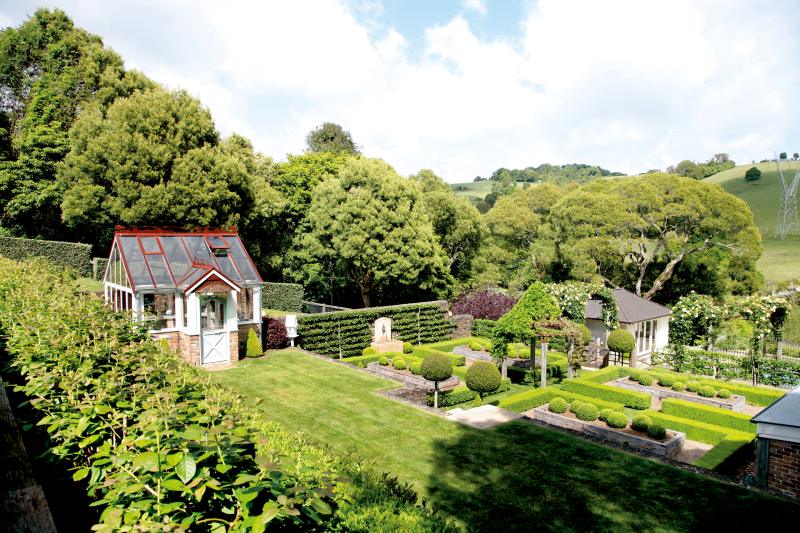
“Since then, we’ve continued to use a lot of clipped and shaped evergreens throughout the garden, an influence from living in Europe, where gardens are generally formal, structured, neat and well-looked after. My goal has been to achieve a good balance of structure and softness, and topiaries help to create that.”
They also made a feature of a bush gully along the garden’s south-eastern edge, encouraging more of its endemic vegetation such as tree-ferns, acacia and pittosporum, and building a pathway into it, as well as a series of cascading pools beneath.
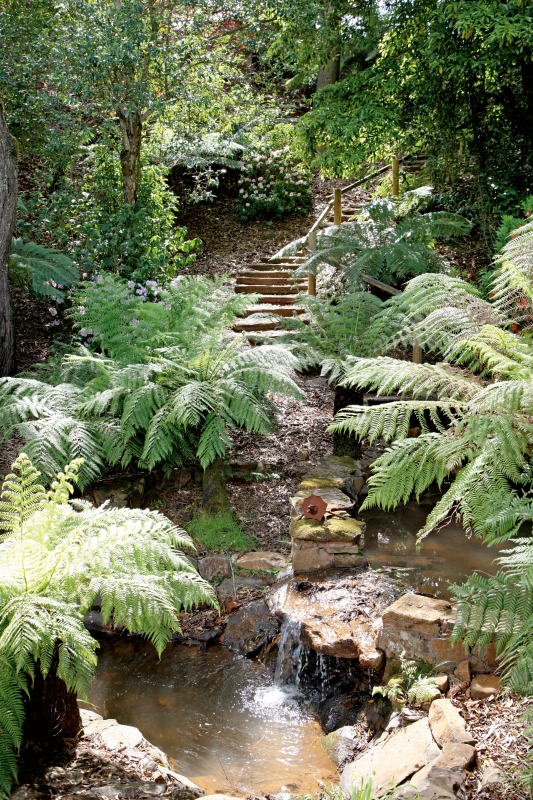
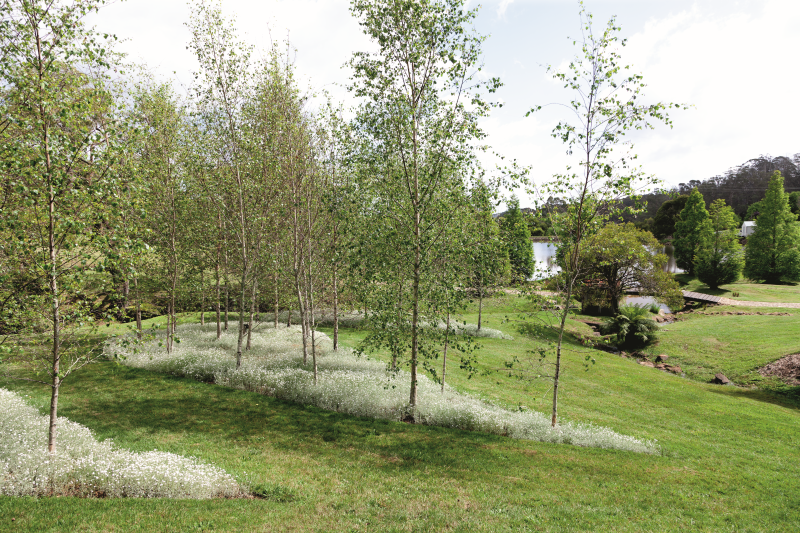
They further developed the gully garden along its lower watercourse with ferns, cannas, gunnera, fuchsia, melianthus, acanthus and salvias. They created a birch grove at the curve of the creek line, where the ground starts to level, with 60 trees arrayed in three teardrop-shaped beds, underplanted with a silver carpet of white-flowering ‘Snow in Summer’ (Cerastium tomentosum). There’s a balance of tranquillity and dynamism in the array of groundcover, grass and trees. With the added sound of babbling water, it’s an area having its own happy picnic.
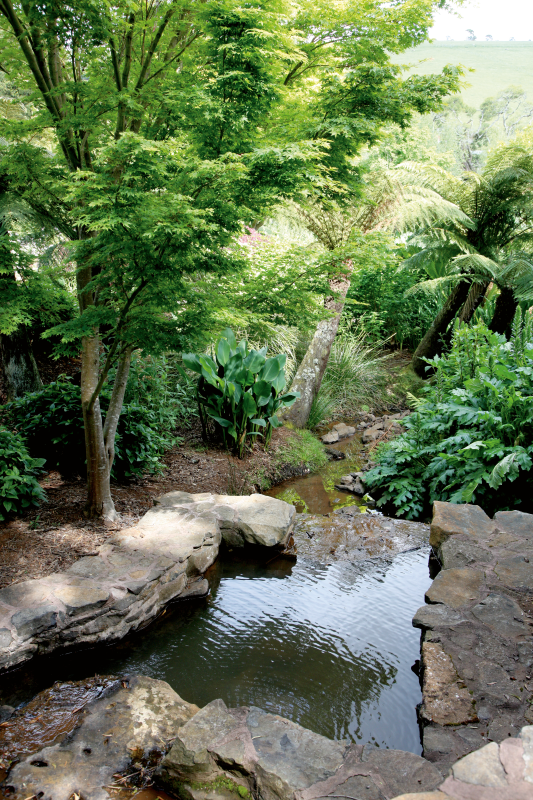
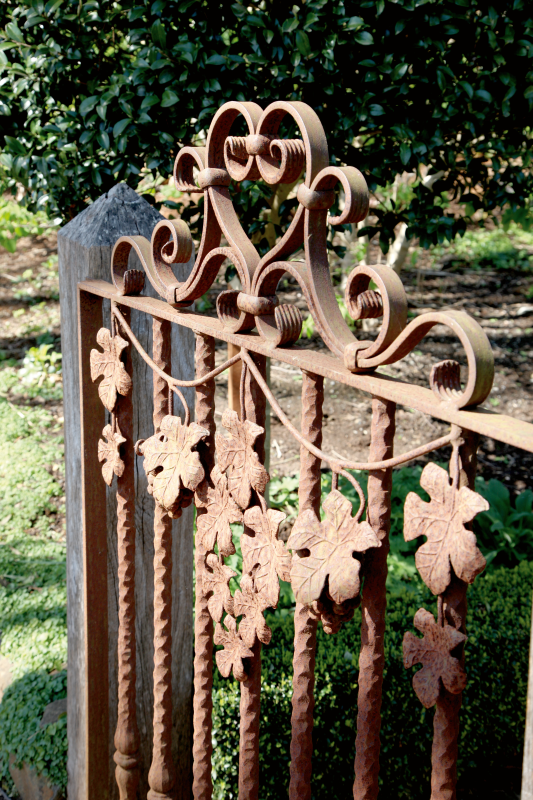
The couple have added steps and a flowing gravel path through the steep slope of beautiful native woodland featuring eucalypts, Black Wattle (Acacia melanoxylon), sassafras (Doryphora sassafras) and coachwood (Ceratopetalum apetalum), expanding the density and size of the area with tree-ferns, viburnum, magnolias, maples, cercis, rhododendrons, hydrangeas and more. Bulbs, hostas, clematis, anemones, aquilegias, cyclamen and other small gems come and go under the canopy throughout the year. The couple have commissioned metal-work arbours and gates leading to the woodland and other areas and added more seating and sculpture throughout the garden – resting points to enjoy the changing outlook.
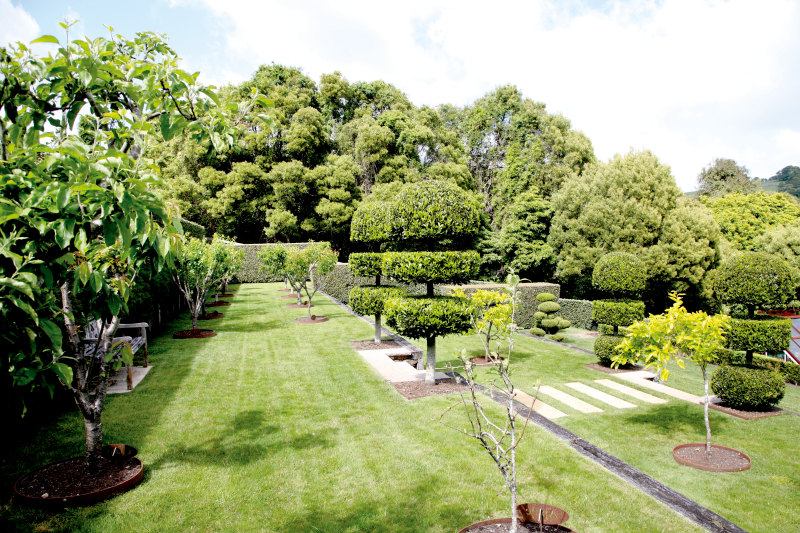
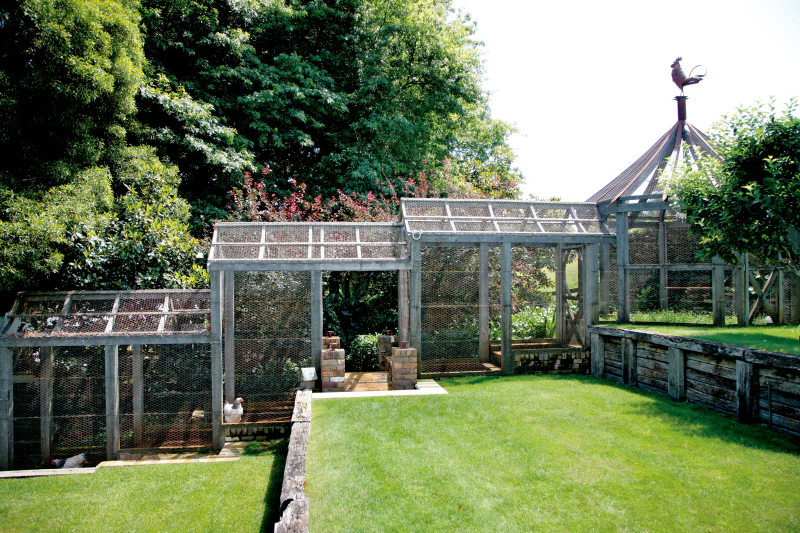
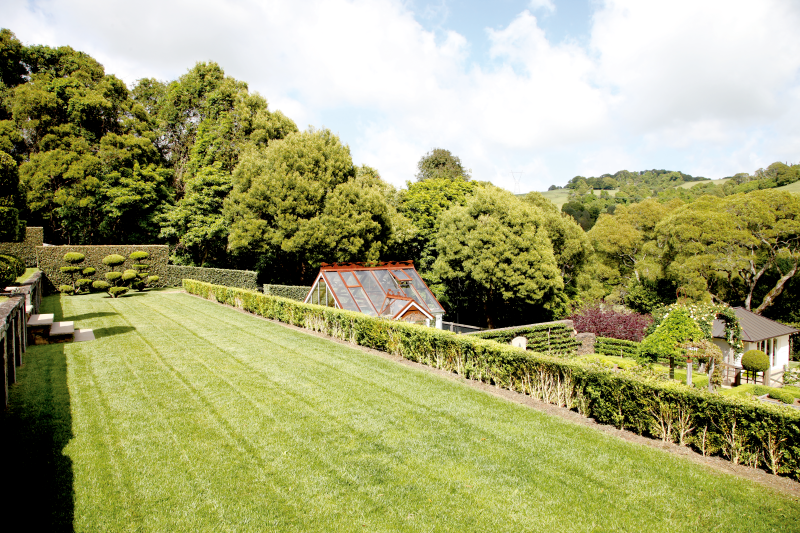
Other previously inaccessible slopes beyond the woodland, below the former ornamental vegetable garden, have been terraced, turning the latter into a romantically infused topiary court, and the existing terraces above it into a celebration of trimming precision. Single, double and even triple-layered lines of blueberries, buxus, rosemary and loropetalum border the long walls of the rising terraces, and a spectacular chicken run, built by previous owners, steps up along the north-western side.
At the top of this dramatically tamed hillside, around 20 or so metres above the topiary court below, a collection of cloud-pruned dwarf cypress and upright bay-tree lollipops await appreciation, as do a pair of persimmons, and a small grove of apples and stone fruit. A thick elaeagnus hedge defines the upper limit of the terraces, and slender widely spaced pencil pines stand behind it. The young pines lead the eye further upwards, so that the gaze ends elegantly, gently, in wonder of the sky above and the earth below.
At the far end of the terrace row, where the earthbound dive of the hill shows itself afresh, quirky maze-like segments of hedged elaeagnus run crossways to the tiered lines. These segmented hedges, if in a gallery, could be called an installation.
They are arresting and intriguing. Serving as a transition point from the tightly terraced hill to the wilder and softer vegetation of the steep gully garden, their placement is surprising yet considered.
Back down by the topiary court a pool area was created and three new curve-walled tiers built to retain the slope beneath, with a hedge of smokebush opposite. Further below, an allée of pears underplanted with lomandra has been recently established, and mass planting of nepeta, magnolias, viburnum and maples added towards the woodland’s lower perimeter.
The extensive works undertaken in these lower areas have increased the garden volume and added substantial interest to the woodland’s edges. More importantly, such changes have provided connections between previously inaccessible terrain. With access now possible and enjoyable from any part of the garden to another, Kathy and George have achieved the integrated flow they envisaged.
On the approach to the house, there was already a fine border of mop top hydrangeas, interspersed with roses. They decided to remove the roses and double the mop top impact.
The gardening team propagated and planted cuttings from the plants in situ, and the result is a hugely impressive entrance way, with a 50 metre gravel drive closely flanked by thick walls of lush hydrangeas, flowering from late spring to the end of autumn. When they are meticulously pruned back, the lines of bare branches create another look, sculptural and impressive in a decidedly different way.
At the front of the house, beyond the perennial beds, flowing lawn interspersed with many trees had created a parkland scene. Some trees had grown, as they do, to partially obscure viewlines. Several were therefore relocated, enhancing the vista over the long lawn and to hills far beyond. As the larger scale of the area was revealed, smaller shrubs and buxus balls were also relocated, many finding a place in a new topiary corner, below an existing rose garden.
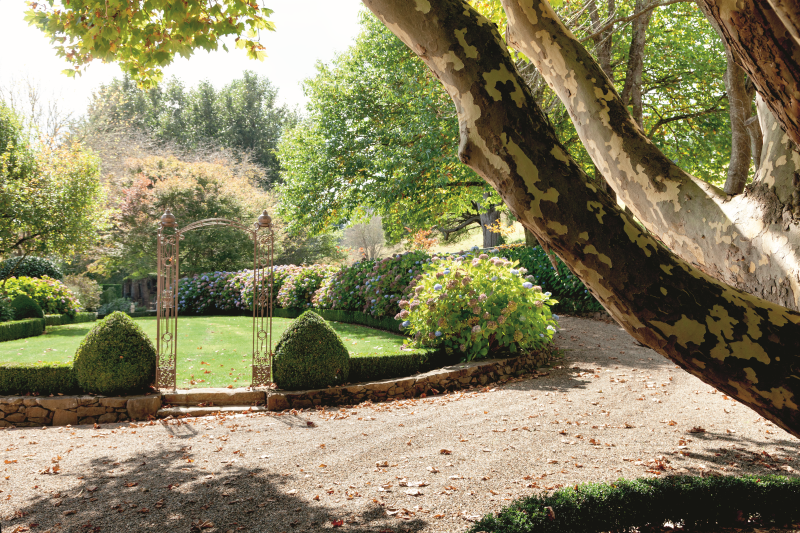
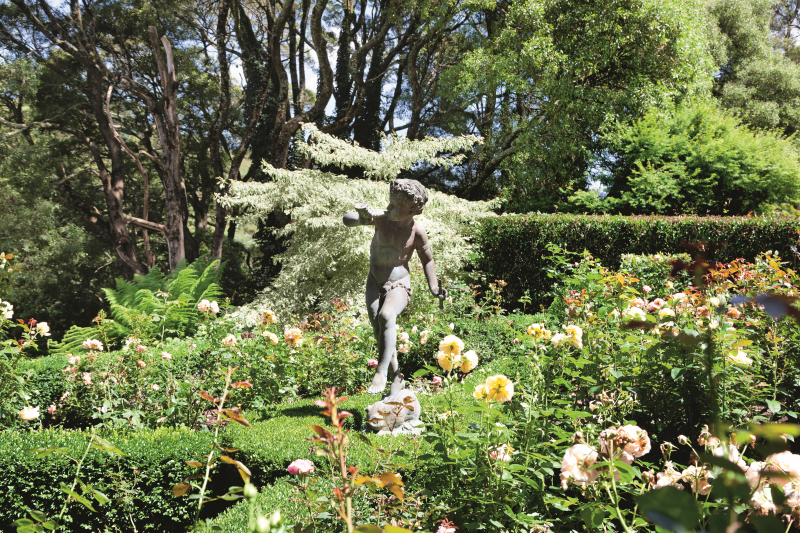
Divided into diamond-shaped sections by diagonal lines of low box hedging, the rose garden suffered badly during the 2020 rains. Many roses were replanted, and a bronze Pan statue was added for decorative effect. Paving work around the house-terrace and entrance area was undertaken using recycled bricks, so that the step off into the garden was stylistically harmonious and also cleaner, with mud-prone areas eliminated.
Looking back on their baptism of fire and flood, the couple feel deeply satisfied with the work they’ve done, and what they’ve learned along the way.
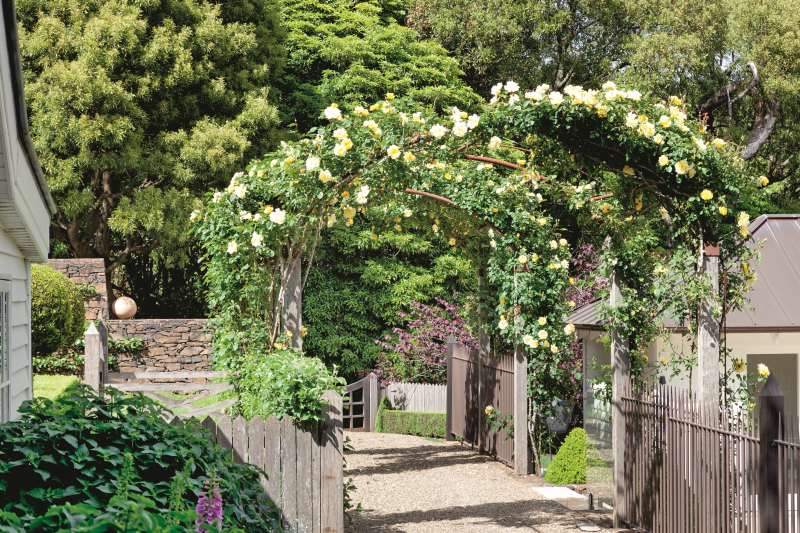
“The garden’s development has exceeded our expectations,” says Kathy, “and we couldn’t have done it without the steadfast support of our head gardener, Jesse Mauger. He’s really become the pillar of this place. He and his team are fantastic, hugely dedicated to the garden’s progress … and we are so grateful for that.” George adds: “It’s been hugely rewarding to put our own mark and personality on the property, and not just because we think we’ve made a beautiful place even more so. Our satisfaction also comes from the knowledge that we’ve made it more secure and resilient for future generations to enjoy as well. That’s a really good feeling.”

Back Issue June / July 2025 (PDF Download)
Relive the beauty of the Southern Highlands with this digital back issue of Highlife.
Building the dream
Mandy and Glen Haddon fulfilled an extensive wish list when they built their dream country home, which includes the perfect layout for visiting family, plus an incredible shed.
Making art and all that jazz
Monica Trapaga made her name as a jazz singer and TV presenter but making art has always been in the background. Her latest exhibition of colourful, sculptural works will open in July in Robertson.
Calling all cattle
Moss Vale saleyards have more than 60,000 cattle through the gates annually. We visited on the busiest day of the year.
Hillside heaven
Gardens never stand still, even ones as impressive as the hillside garden at Pepper Tree Creek. Its owners show us their stunning evolving garden.
Citrus superpowers
Winter is peak harvest time for oranges, lemons and mandarins, but citrus fruits can spritz up life year round.
Windows of opportunity
Mittagong company Evalock has made tens of thousands of windows and doors over 43 years. Owners Andrea Evans and Will Evans explain why they value both hand tools and high-tech machinery.
An Irish country garden
When Goulburn landscape designer Lorna Vallely and her husband Paul moved to Ireland in 2018 they found the dream project, a historic property in need of a new garden.
Then and Now
Bundanoon Soldiers’ Memorial Hall recently celebrated 90 years. Today it’s still used almost every day.
Snow’s up
Japan’s Hakuba Valley is ideal for skiers of all abilities, making it perfect for a family holiday, as Melissa Penn discovered when she and her family visited last January.
This is a virtual product. Upon purchase, you’ll receive instant access to download the magazine as a PDF. A secure download link will also be sent directly to your email, so you can revisit and enjoy your issue anytime.